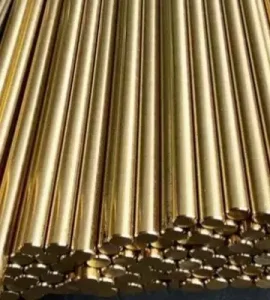
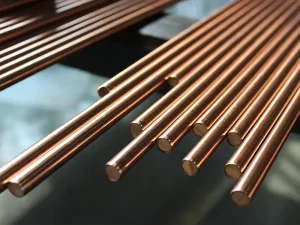
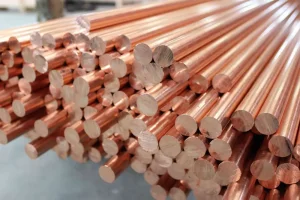
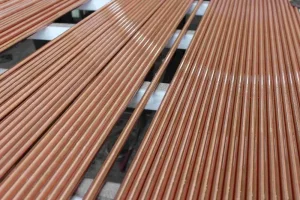
Explore our engineering-grade custom copper alloy series designed to optimize processing efficiency, electrical performance, and mechanical reliability.
In modern industrial applications demanding synchronized structural integrity and electrical efficiency, C18150 (Chromium Zirconium Copper) stands as a foundational material.
As advanced industries migrate toward high-frequency automation and high-load power electronics, basic copper grades can no longer satisfy structural challenges. Under elevated temperatures, conventional pure copper loses its hardness and undergoes structural deformation, resulting in catastrophic failure of welding electrodes, electrical connectors, and cooling structures. To mitigate this engineering bottleneck, C18150 Chromium-Zirconium-Copper (CuCr1Zr) has emerged as the premier choice for global procurement teams seeking optimal trade-offs between thermal-electrical conductivity and mechanical resilience.
By incorporating traces of Chromium (Cr: 0.6%–1.2%) and Zirconium (Zr: 0.05%–0.25%), C18150 triggers a controlled double-precipitation hardening phase during heat treatment. The addition of Chromium restricts structural grain boundary slippage under high-temperature cycles, whereas the dispersion of Zirconium enhances the recrystallization temperature threshold. The resulting alloy exhibits an outstanding softening temperature of up to 500°C while sustaining an electrical conductivity above 80% IACS, establishing it as a highly reliable material for resistance welding, energy storage, and semiconductor manufacturing.
Operates stably in environments up to 500°C without undergoing microstructural recrystallization or losing yield strength, far outperforming standard copper alloys.
Maintains an electrical conductivity profile exceeding 80% IACS, allowing optimized current density transfer with minimal heat dissipation.
The precipitation of secondary phases yields superior resistance to plastic deformation, electrode mushrooming, and cyclical mechanical fatigue.
Analyzing key industrial forces driving the global adoption of C18150 Chromium Zirconium Copper alloys.
The automotive industry's structural transition toward lithium-ion battery configurations has fueled a high demand for high-strength, high-conductivity materials. In EV gigafactories, battery pack assemblies require thousands of micro-welds joining thin nickel tabs, aluminum collectors, and copper busbars. Standard copper electrodes quickly weld to the workpieces or deform under high current cycles.
C18150 acts as the ultimate electrode material. It resists sticking, prevents contamination of the weld pool, and minimizes downtime associated with tip dressing, directly enhancing line throughput.
In metallurgy, continuous steel casting relies heavily on rapid, uniform heat extraction. Mold plates fabricated from C18150 sustain severe thermal gradients while holding their structural shape. Its resistance to thermal fatigue cracks ensures longer service life, reducing costly blast-furnace maintenance pauses.
By extending the mold operational cycle, steel manufacturers achieve significant reductions in operational expenditure (OpEx) while maintaining superior surface finishes on cast steel slabs.
C18150 plays a critical role in liquid fuel rocket engine nozzles and combustion chamber liners. It sustains high heat transfer coefficients under high-pressure thrust cycles, preventing combustion chamber meltdown.
A comparative overview of C18150 against other common copper alloy systems, highlighting why it is the standard for high-temperature electrical applications.
| Alloy Specification | UNS Grade | Electrical Conductivity (% IACS) | Thermal Conductivity (W/m·K) | Softening Temperature (°C) | Tensile Strength (MPa) | Primary Commercial Use Cases |
|---|---|---|---|---|---|---|
| Chromium Zirconium Copper | C18150 | ≥ 80% | 320 - 350 | 500 | 450 - 550 | Resistance welding electrodes, EV battery tabs, rocket engine nozzles. |
| Beryllium Copper | C17200 / C17300 | 15 - 25% | 105 - 130 | 350 | 1100 - 1350 | Heavy-duty springs, non-sparking safety tools, aerospace bushings. |
| Tellurium Copper | C14500 | 90 - 98% | 355 - 370 | 350 | 250 - 320 | High-speed machined electrical parts, laser cutting nozzles, plasma torch tips. |
| Oxygen-Free Copper | C10200 / C10100 | ≥ 101% | 390 | 180 | 220 - 300 | Semiconductor packaging, vacuum interrupters, busbars, electrical audio. |
| Sulfur Copper | C14700 | 90 - 95% | 350 | 350 | 240 - 310 | Precision-turned electronic connectors, high-speed automated milling parts. |
How Sichuan Kepai New Material Co., Ltd. blends modern automation with agile manufacturing to secure global material supplies.
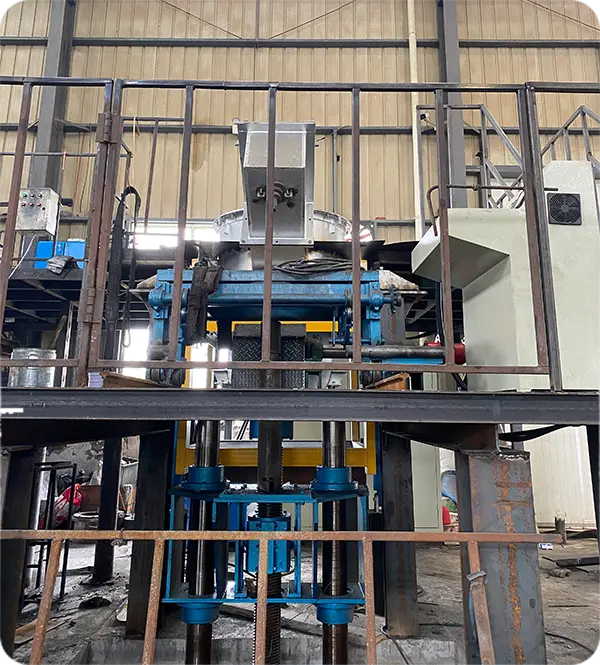
At Kepai, our smelting facilities rely on vacuum induction furnace systems and precision dosing controls. When manufacturing C18150, even tiny fluctuations in Zirconium or Chromium can lead to premature softening or a drop in conductivity. Our processes maintain alloying elements within narrow tolerances (±0.05%), ensuring uniform material properties across production runs.
By integrating all processes on-site—from initial casting and hot extrusion to cold drawing, solution treatment, and aging—we bypass external supply bottlenecks. This integrated manufacturing model helps control costs, ensures complete structural traceability, and reduces standard export lead times.
Quality control is critical for high-end applications. Every production batch undergoes non-destructive eddy current testing, chemical analysis, and mechanical testing. From structural grain evaluation to hardness verification under stress, we ensure every shipment meets strict aerospace and automotive criteria.
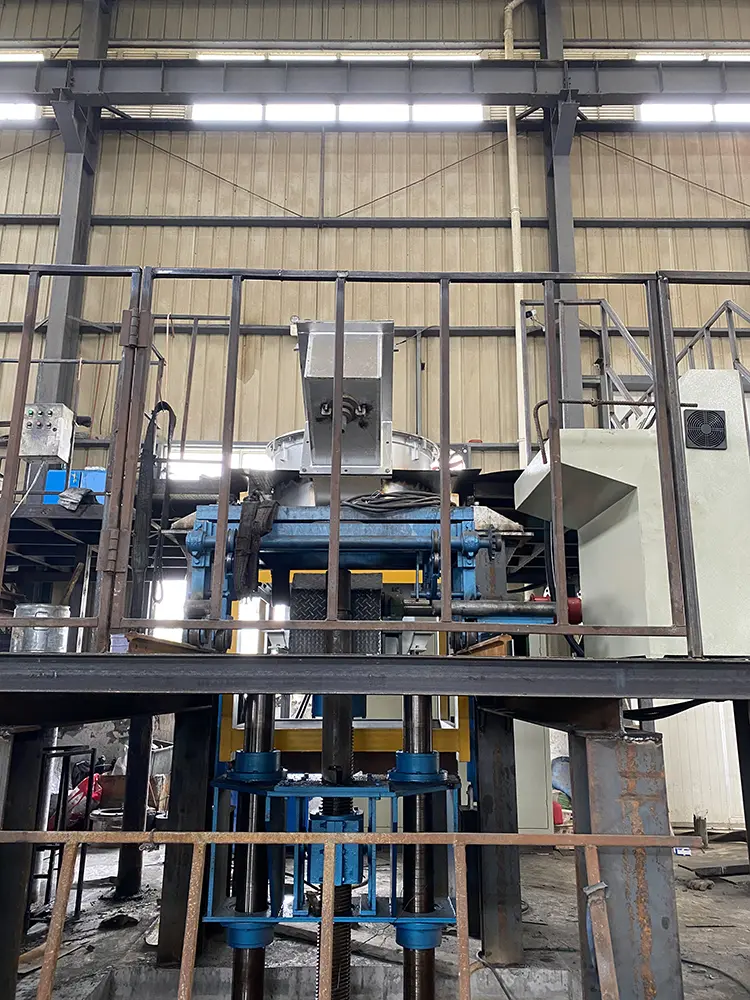
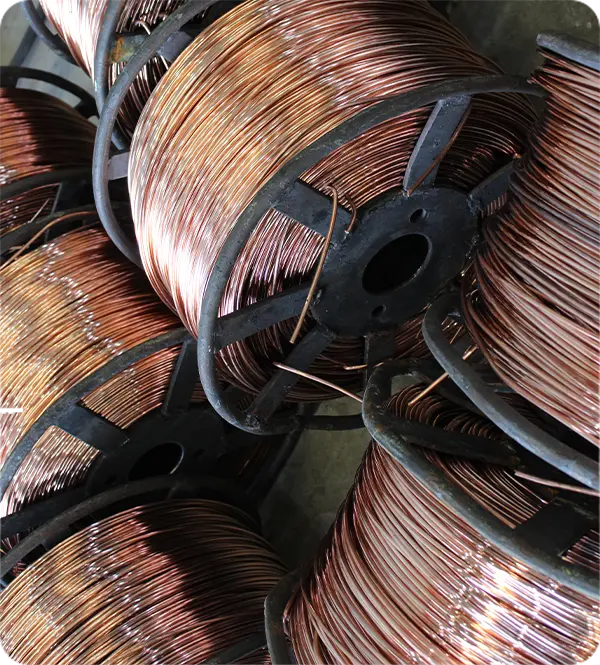
Smelting & Refining
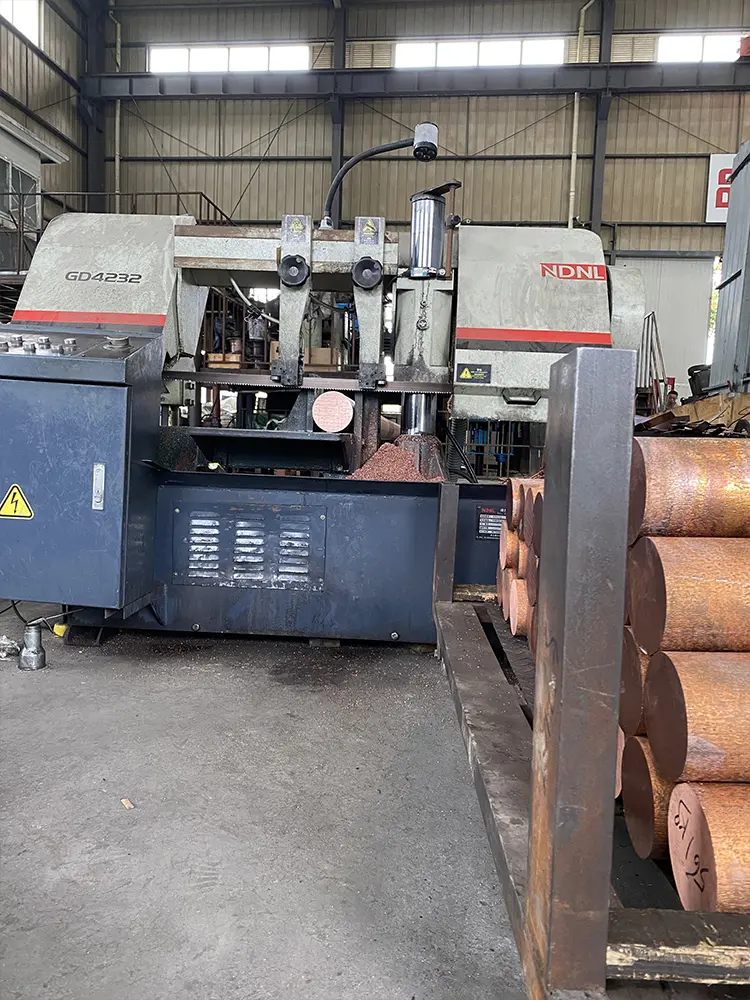
Precision Laying-Off
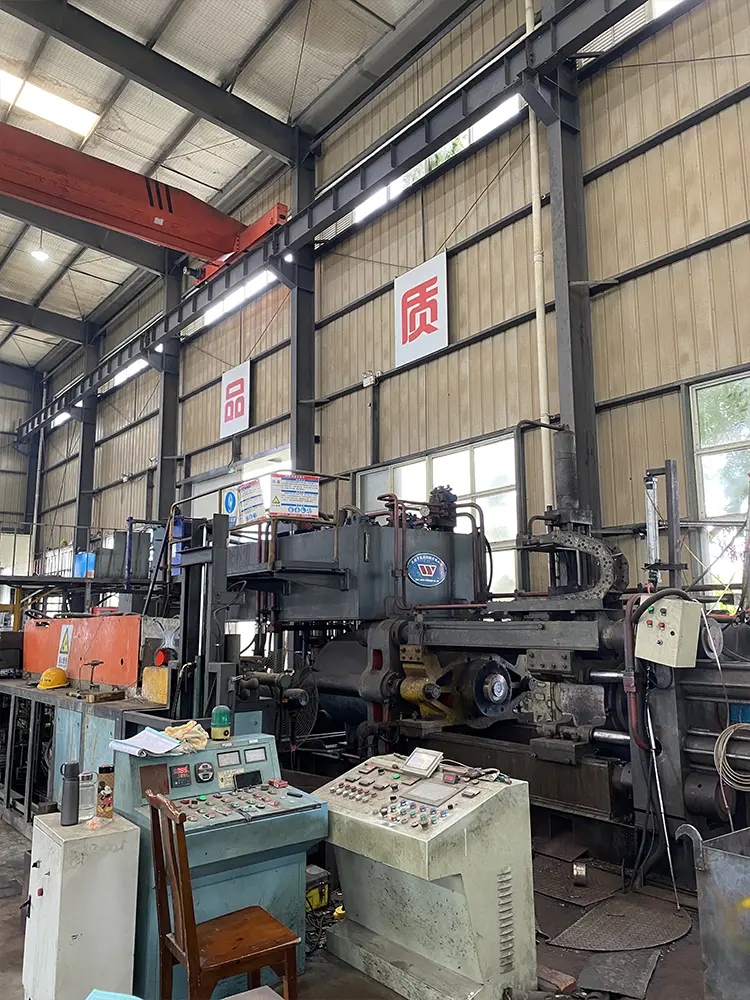
Hot Extrusion
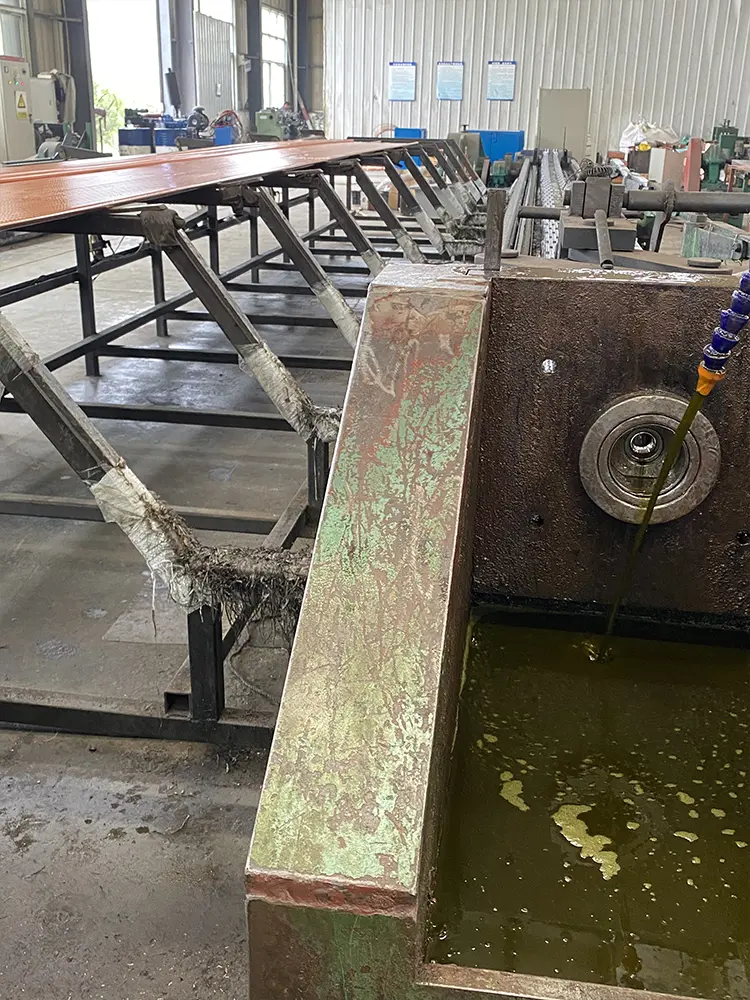
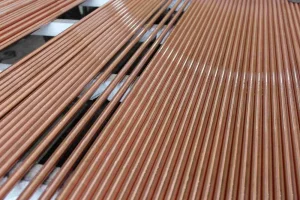
Cold Drawing
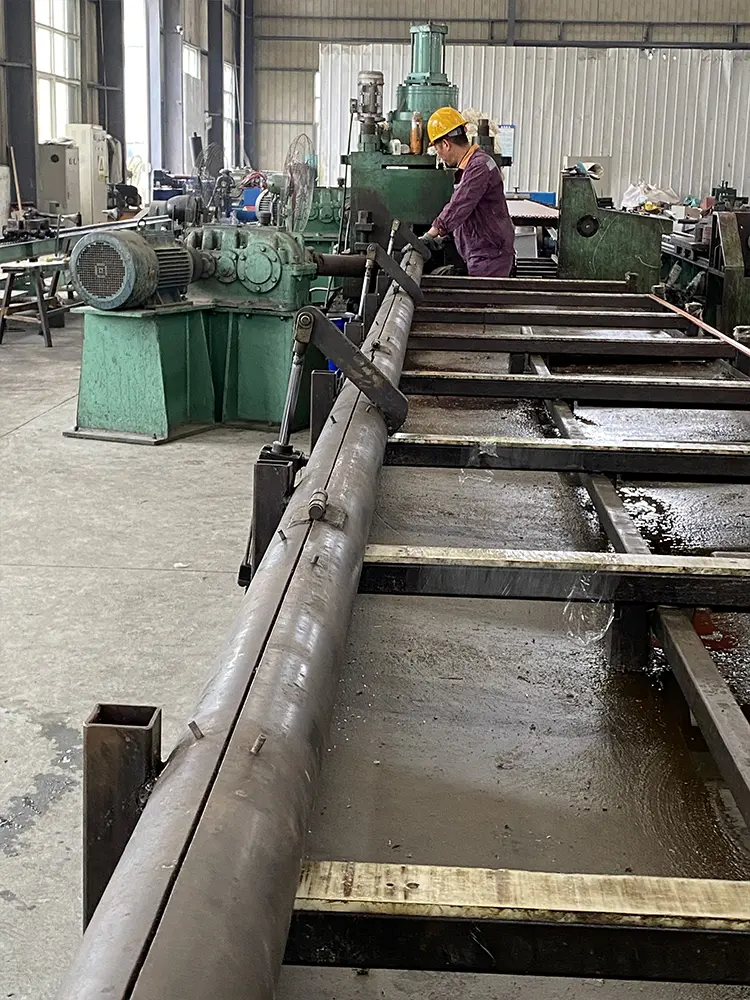
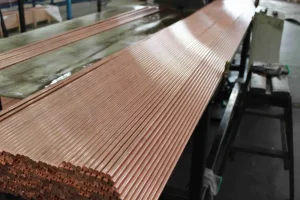
Automatic Straightening
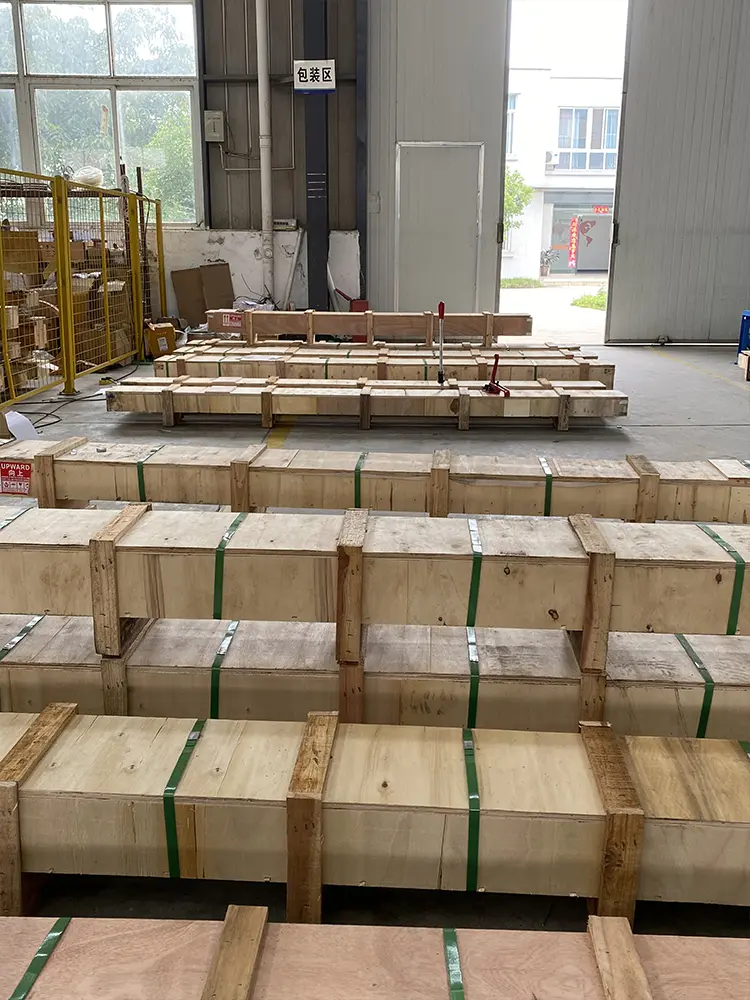
Protective Packaging
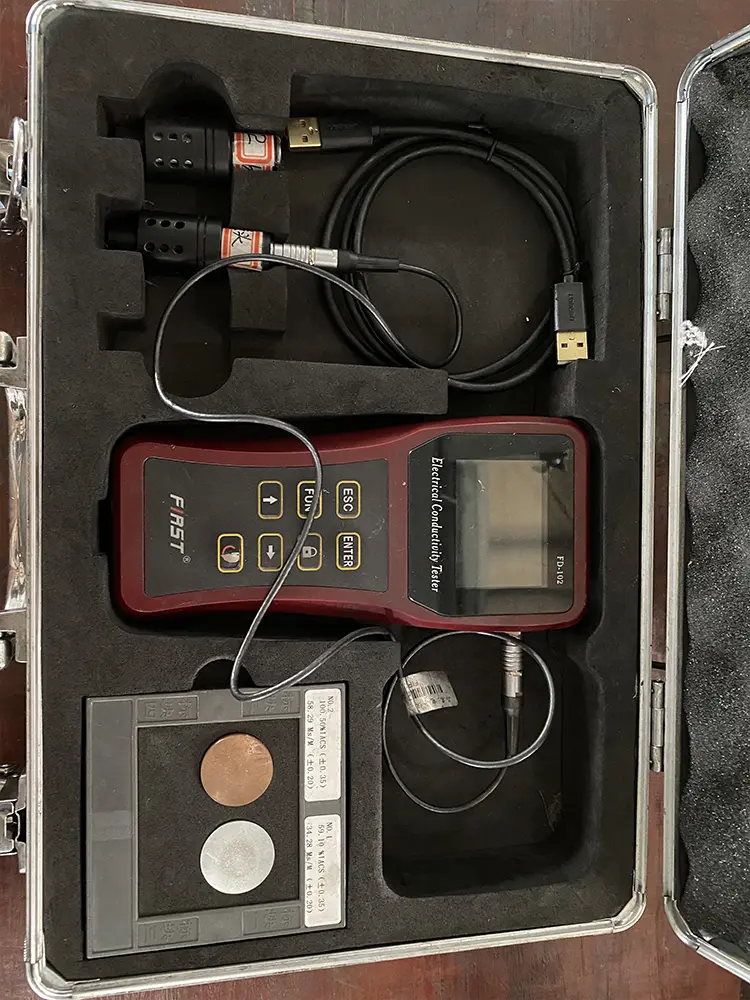
Eddy Current Conductance Testing
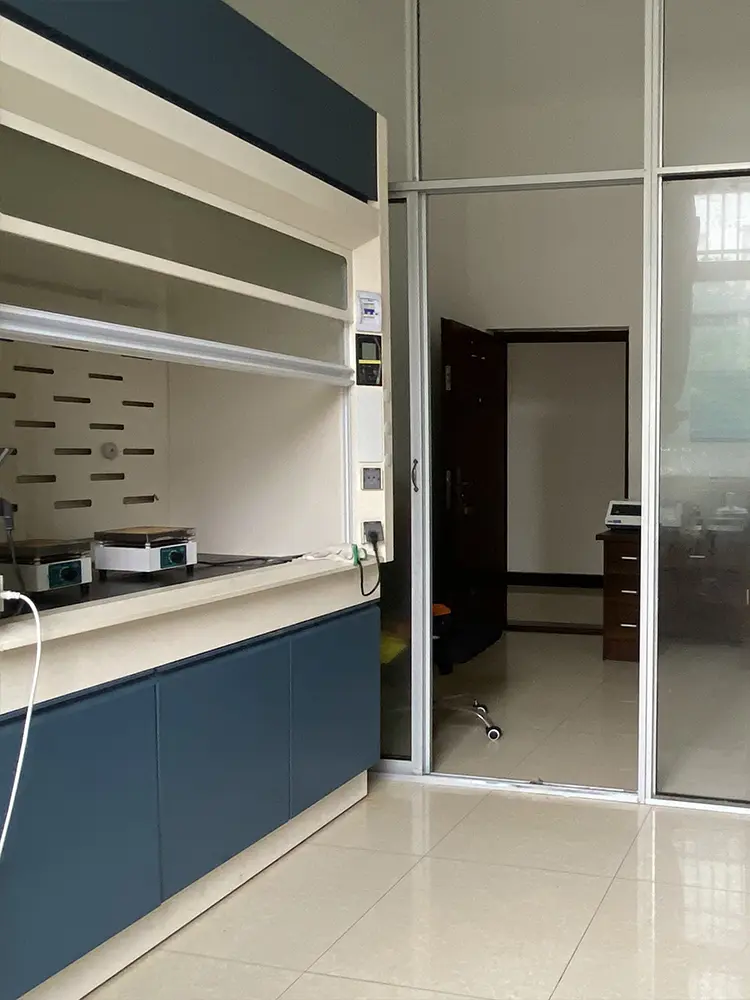
Chemical Analysis Laboratory

Metallographic Specimen Lab
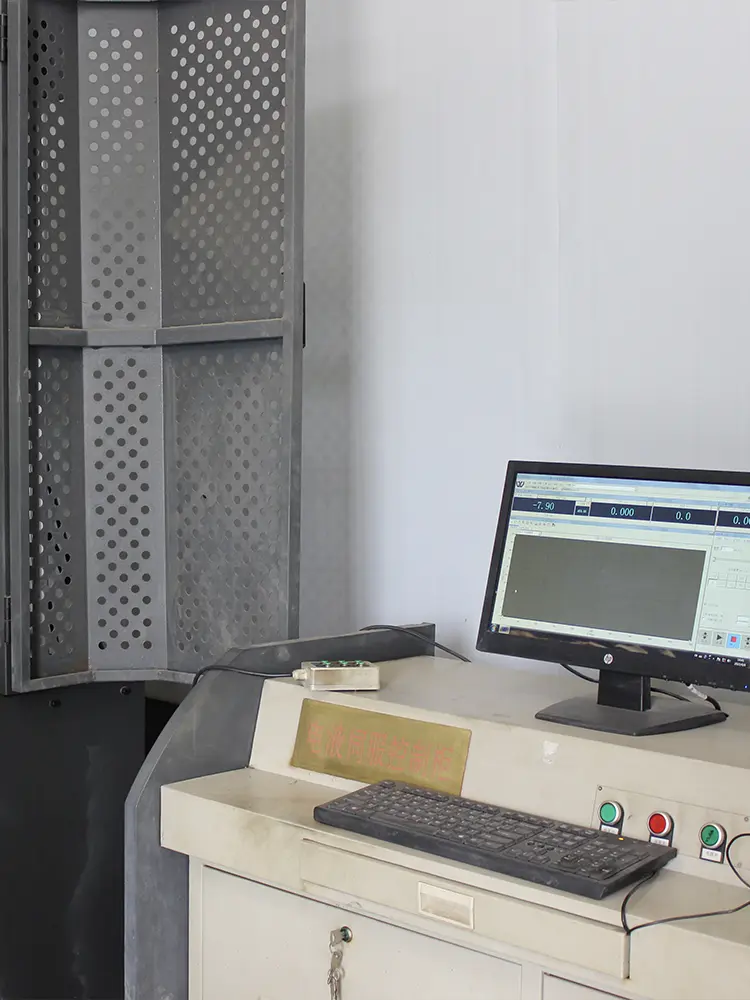
Electro-Hydraulic Servo Tester
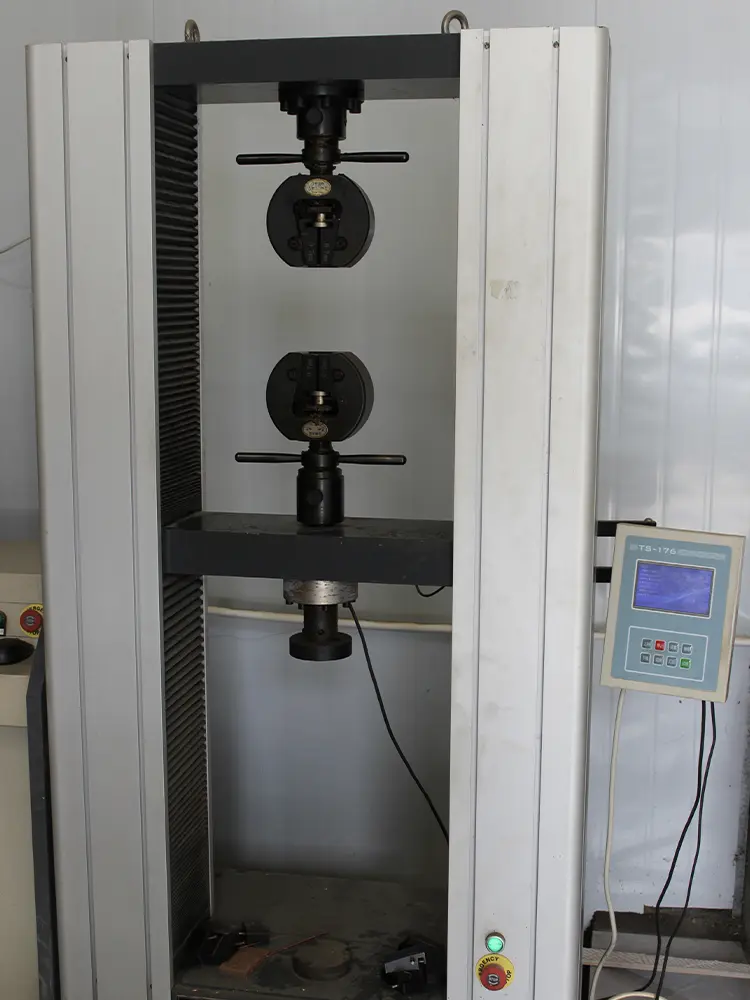
Electronic Universal Tensile Tester
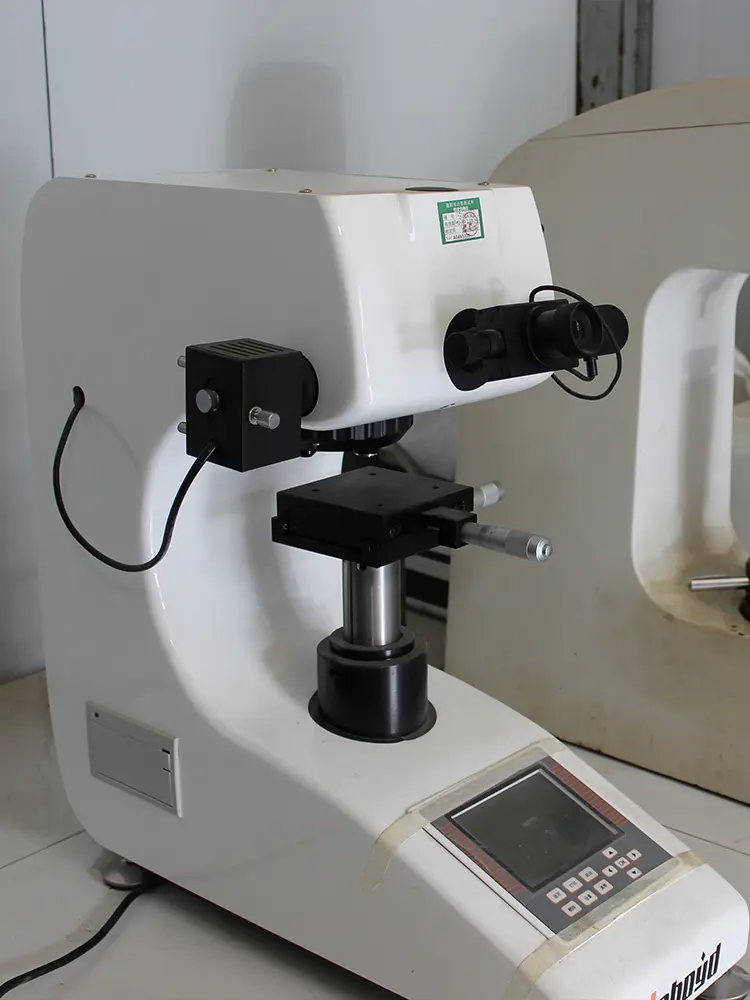
Hardness Testing Lab
Sichuan Kepai New Material Co., Ltd. is a specialized high-tech enterprise dedicated to the research, development, production, and distribution of advanced copper alloy systems. Located in the Guanghan Industrial Development Zone, adjacent to National Highway 108, our facilities enjoy solid logistics integration and geographical advantages, supporting fast international shipping routes.
Our R&D team works with top-tier metallurgical institutions to explore the boundaries of high-conductivity, high-strength, and free-cutting copper alloys. These products serve as critical resources for modern industries, supporting applications in electric vehicles, 5G base stations, high-precision laser cutting heads, electrical switches, and heavy energy storage projects.
By adhering to our core philosophy of "innovation-driven development, quality wins the market," we continually improve our quality control systems to supply premium materials that meet modern performance and ecological standards.
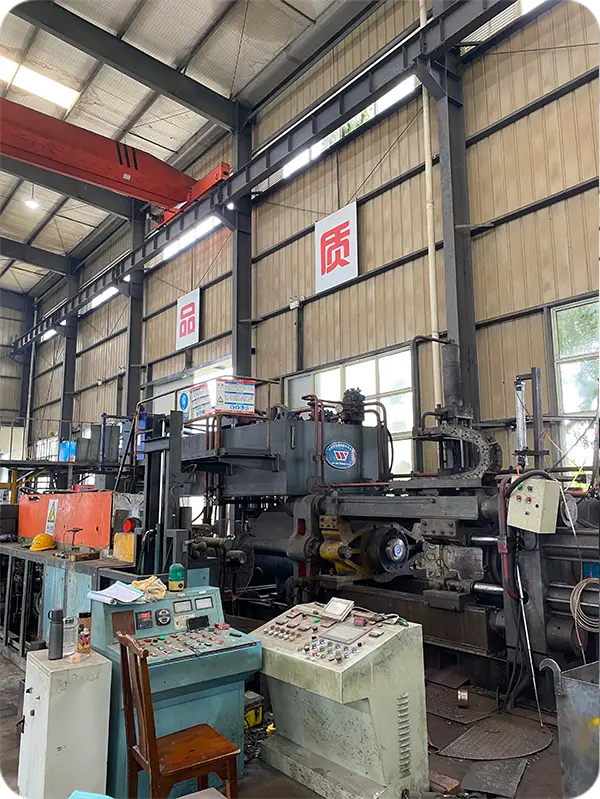

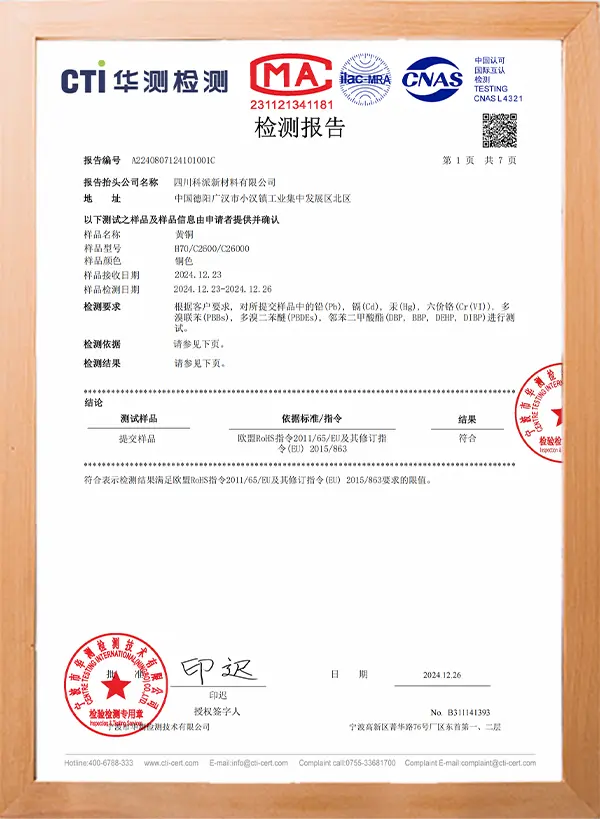
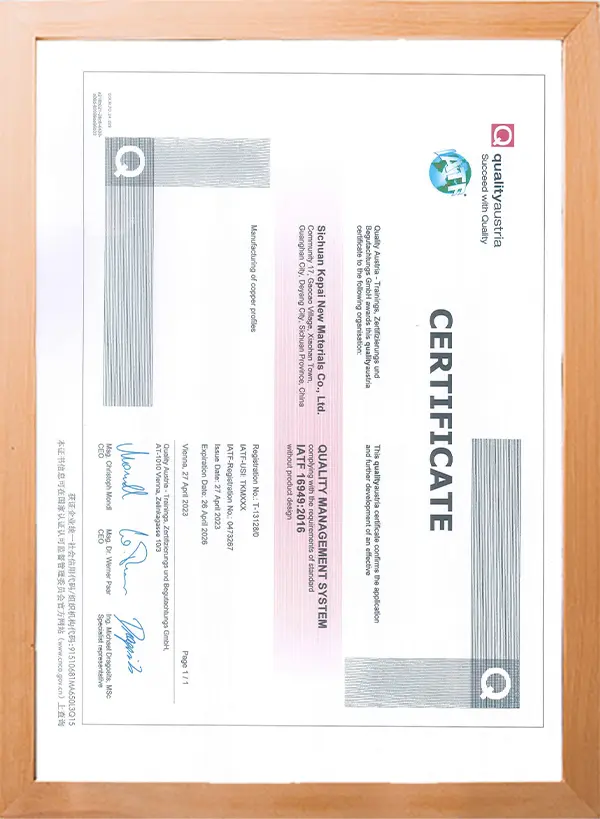
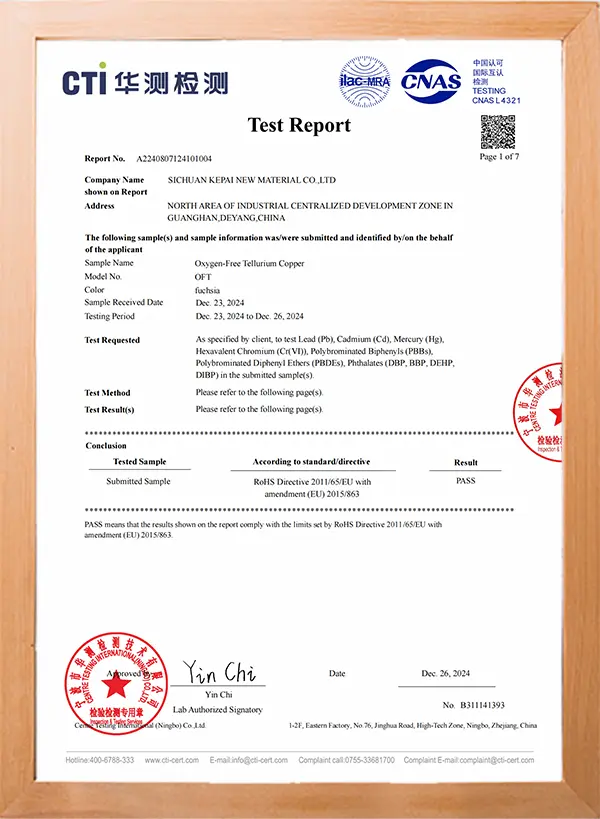
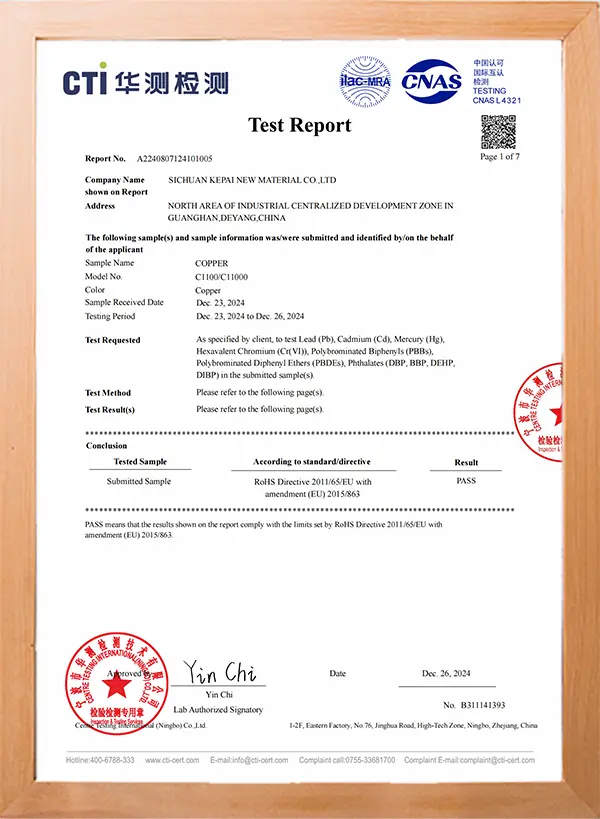
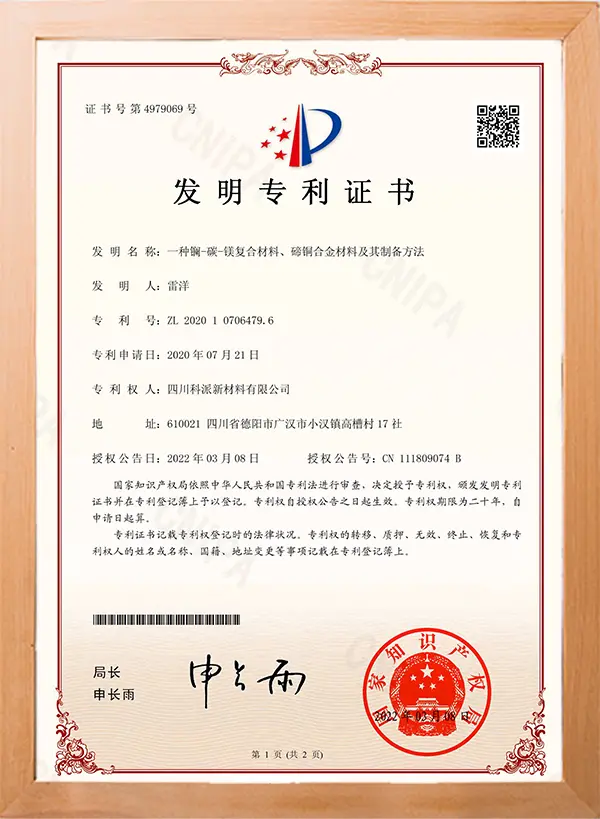
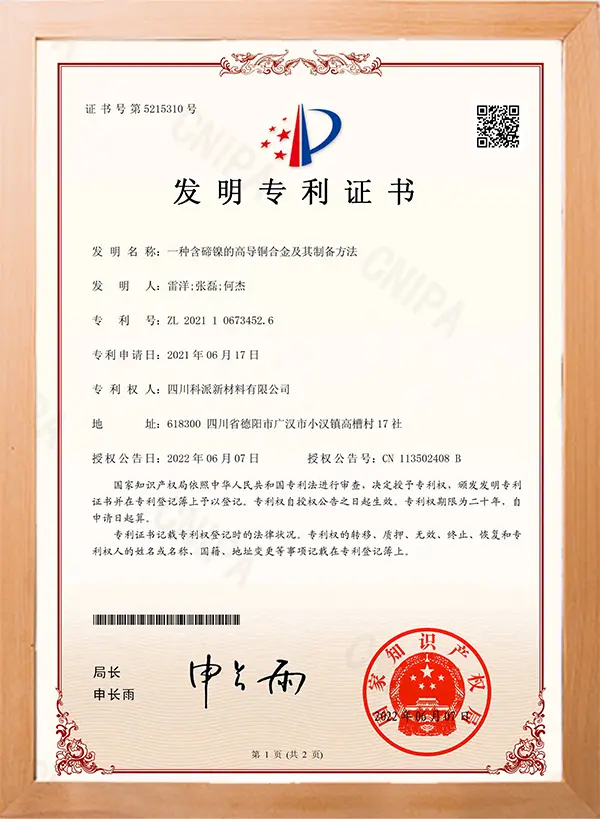
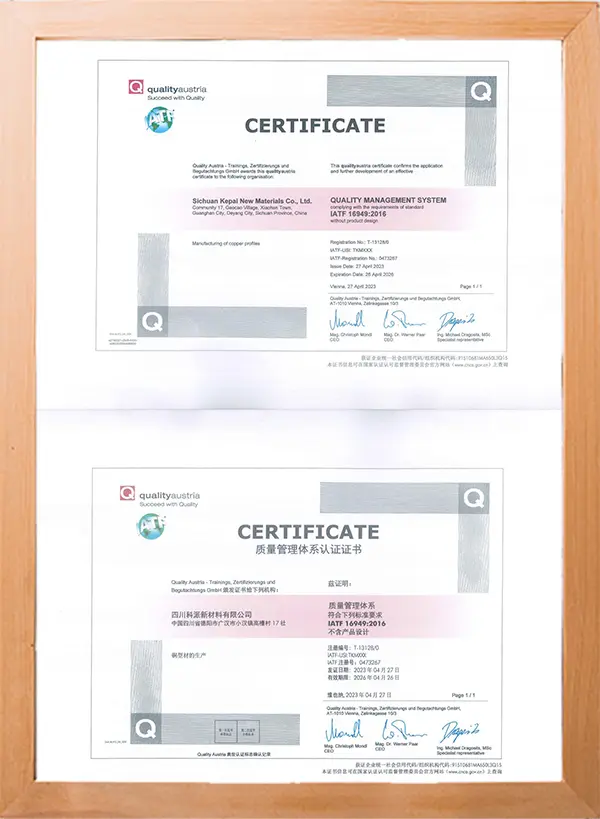
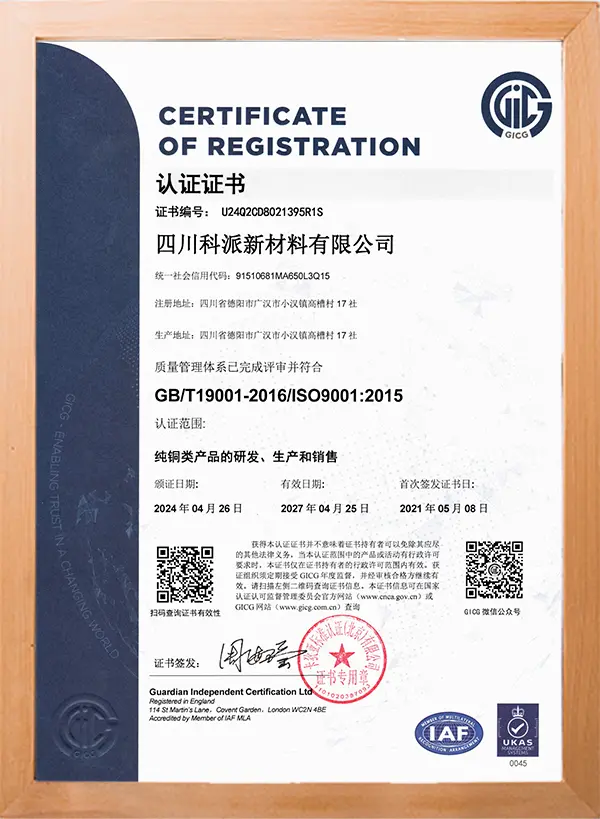
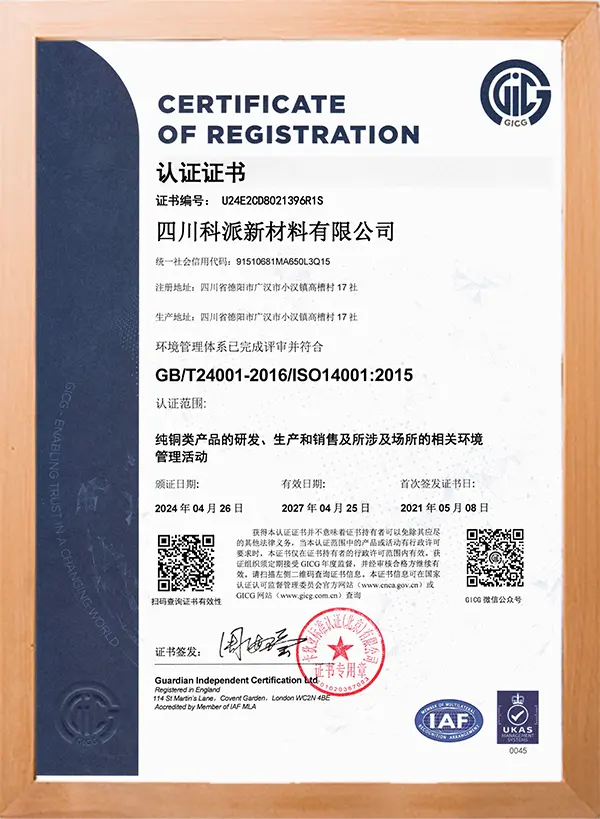
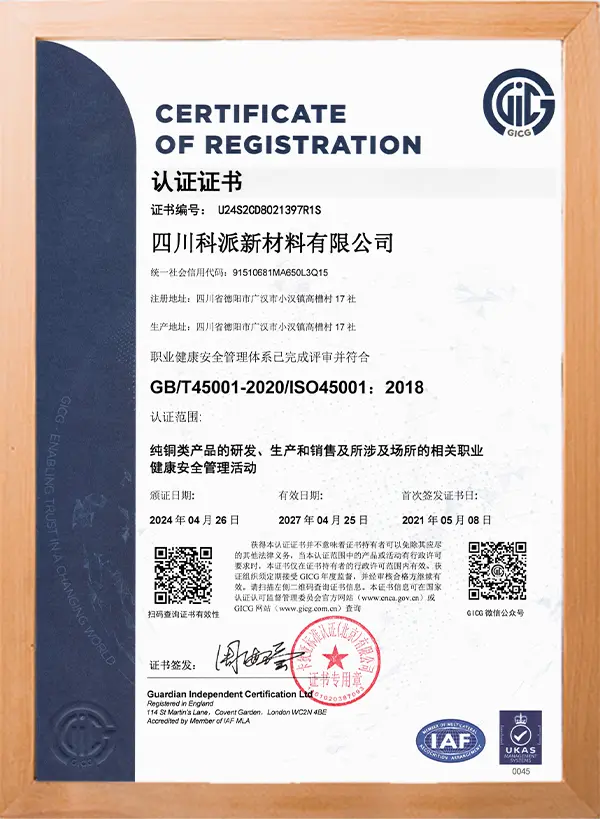
Our manufacturing protocols are fully ISO certified, ensuring strict alignment with international quality standards for demanding applications.
Get answers to common metallurgical, operational, and procurement questions regarding C18150 applications.
While both are chromium-copper alloys, C18150 (CuCr1Zr) incorporates Zirconium (typically 0.05%–0.25%) in addition to Chromium. The addition of Zirconium increases its recrystallization/softening temperature, improves resistance to high-temperature creep, and reduces sticking tendencies during resistance welding, particularly on zinc-coated or galvanized steels. C18200 does not contain Zirconium, making it slightly more susceptible to thermal deformation at higher temperatures.
During high-volume automotive assembly, spot welding electrodes undergo cyclic thermal stresses and mechanical pressure. C18150 maintains its hardness up to 500°C, which prevents the electrode tip from flattening or "mushrooming." Its high electrical conductivity (80% IACS) also minimizes heat buildup within the electrode itself, extending its service life and reducing production downtime.
C18150 achieves its mechanical properties through a combination of solution heat treatment (heating to 900–980°C and water quenching) followed by cold working, and finally precipitation aging at 450–500°C. This sequence causes the chromium and zirconium phases to precipitate uniformly within the copper matrix, reinforcing the alloy's structural integrity without blocking the pathways for electrical flow.
We manage consistency by monitoring every stage of production in our 9,000-square-meter facility. This includes vacuum induction melting to control composition, automated extrusion to ensure structural uniformity, and testing with universal tensile testers, hardness testers, and eddy current instruments to verify performance before packaging.
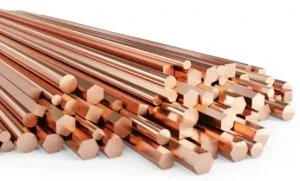
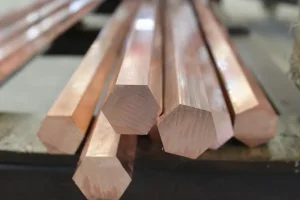
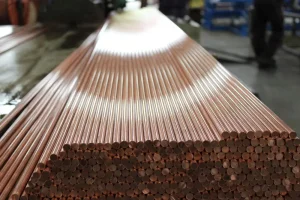
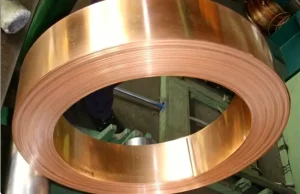
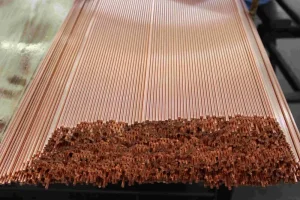
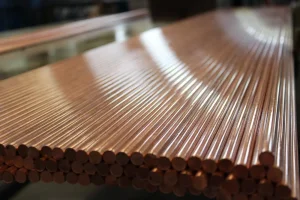
Yes, our extrusion and drawing lines allow us to supply C18150 in various custom geometries, including hexagonal bars, square rods, custom sheets, plates, and machined parts according to customer drawings. We also offer pre-cut and machined shapes to help reduce material waste on our clients' production lines.
Collaborate with Sichuan Kepai to optimize your high-performance copper alloy sourcing. Our engineers are ready to assist with custom specifications, mechanical testing requests, or volume production quotes.
We supply a variety of specialty alloys, from free-cutting tellurium grades to high-wear lead bronzes, designed to meet diverse industrial requirements.
 Kepai
Kepai