Home >
Lead Bronze >
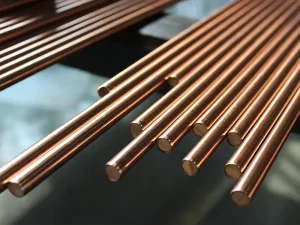
OEM Lead Bronze---Better Wear Resistance Manufacturer, Manufacturers
1 / 3
OEM Lead Bronze---Better Wear Resistance Manufacturer, Manufacturers
In terms of mechanical properties, lead bronze shows excellent wear resistance and fatigue resistance. Its hardness can reach 80-120HB, tensile strength of more than 300MPa, fully meet the requirements of heavy load conditions.
Lead bronze, as an important copper base alloy material, plays an irreplaceable role in the industrial field.
I. Material characteristics of lead bronze
Lead bronze is a special alloy made by adding lead element on the basis of copper-tin alloy. The addition of lead significantly improves the frictional properties of the material, and the lead content is usually between 5%-25%, which can be adjusted according to the specific application needs.
In terms of mechanical properties, lead bronze shows excellent wear resistance and fatigue resistance. Its hardness can reach 80-120HB, tensile strength of more than 300MPa, fully meet the requirements of heavy load conditions.
The frictional properties of lead bronze are particularly outstanding. Lead particles form a lubricating film during friction, and the friction coefficient can be as low as 0.01-0.05, which significantly reduces the wear of moving parts.
2. Processing advantages of lead bronze
Lead bronze has good casting properties, good fluidity, low shrinkage, and can be used to manufacture parts with complex shapes. Its casting yield can reach more than 95%, which greatly reduces the production cost.
In machining, lead bronze shows excellent cutting performance. The cutting speed can reach more than 150m/min, the tool life is extended by 30%, and the processing efficiency is significantly improved.
Surface treatment is another advantage of lead bronze. Its surface finish is high, easy to electroplating, spraying and other treatment, to meet the needs of different working conditions.
3. Application fields of lead bronze
In the field of heavy machinery, lead bronze is widely used in the manufacture of key components such as bearings and bushings. Its excellent wear resistance and self-lubricating properties ensure long-term stable operation of the equipment.
In the shipbuilding industry, lead bronze is used in the manufacture of propeller bearings, rudder bearings and other important parts. Its characteristics of seawater corrosion resistance fully meet the requirements of Marine environment.
In the field of energy equipment, lead bronze is often used to manufacture key components such as turbine bearings and generator bearings. Its high load-bearing capacity and anti-fatigue performance provide a reliable guarantee for the safe operation of the equipment.
Lead bronze has become an indispensable material in modern industry due to its excellent properties and wide range of applications. Choosing high-quality lead bronze products will provide you with reliable performance assurance for your equipment.
Frequently Asked Questions (FAQ)
1. What is the composition of lead bronze?
Lead bronze is a copper-based alloy created by adding lead to a copper-tin base. The lead content typically ranges between 5% and 25%, depending on the specific requirements of the application.
2. Why does lead bronze have excellent wear resistance?
During friction, the lead particles in the alloy form a lubricating film. This reduces the friction coefficient to as low as 0.01-0.05, significantly minimizing the wear and tear of moving parts.
3. What are the key mechanical properties of lead bronze?
Lead bronze features exceptional fatigue resistance and high load-bearing capacity. It exhibits a hardness level of 80-120HB and a tensile strength exceeding 300MPa, making it ideal for heavy-load operations.
4. How easy is it to machine and cast lead bronze?
It has excellent casting properties, offering high fluidity and low shrinkage, resulting in a casting yield above 95%. For machining, it supports cutting speeds over 150m/min and extends tool life by up to 30%, which significantly reduces manufacturing costs.
5. What industries and components utilize lead bronze?
Lead bronze is widely used in heavy machinery (bearings and bushings), shipbuilding (propeller and rudder bearings due to seawater corrosion resistance), and energy equipment (turbine and generator bearings).
 Kepai
Kepai