 Kepai
Kepai
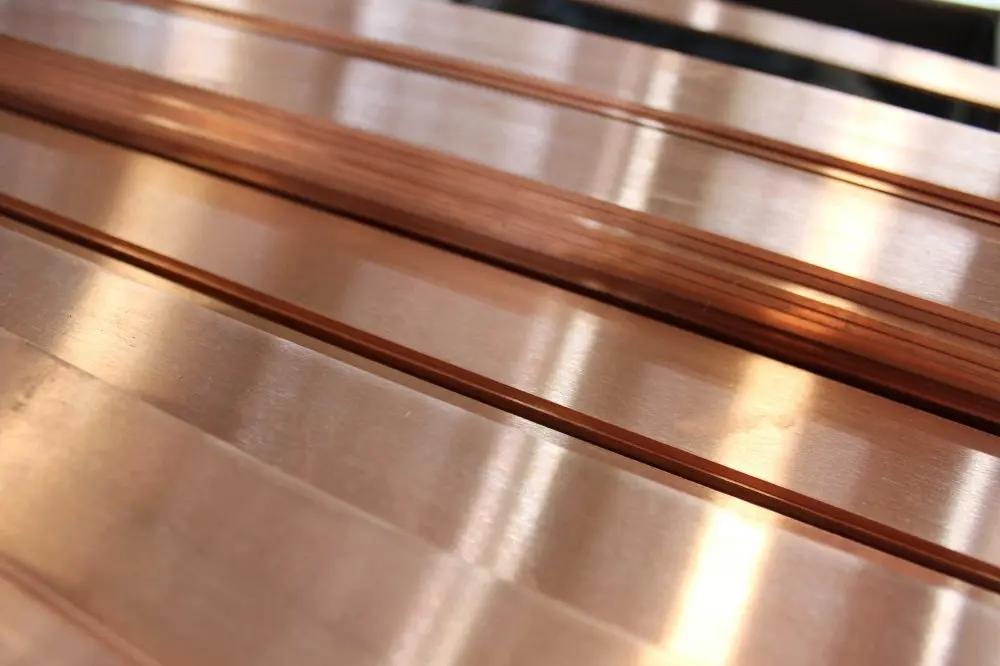


1 / 5
It is difficult for ordinary copper alloys to meet high strength and high conductivity at the same time, and the C17300 balances these two points perfectly through the addition of beryllium and cobalt, which is especially suitable for high-load and high-current application scenarios.
The precipitation strengthening of beryllium makes the material have very high wear resistance, which is suitable for the manufacture of springs, bearings and other parts that need to withstand friction for a long time.
Easy to cut, press and form, excellent surface treatment performance, suitable for the manufacture of complex shapes of precision parts.
Stable performance in humid, high temperature or chemical corrosion environment, long service life.
It is used to manufacture high-precision components such as connectors, relays and switches to ensure the stability and reliability of signal transmission.
Manufacturing sensors, high voltage relays, charging pile contacts, etc., to meet the stringent requirements of high temperature and high current.
Used to manufacture fasteners, springs, bearings and other key components, with lightweight, high strength characteristics.
Manufacturing mold, electrode, welding, etc., wear resistance, high temperature resistance, extend the service life of equipment.
Used for fuel cell bipolar plate, wind power conductive slip ring, etc., to meet the needs of high conductivity and corrosion resistance.
C17300 is primarily composed of Copper (97.5% - 98.5%), Beryllium (1.8% - 2.0%), and Cobalt (0.2% - 0.6%) which provides high strength, hardness, and heat resistance.
Following age hardening and heat treatment, C17300 Beryllium Copper can achieve an outstanding tensile strength range of 800 to 1200 MPa.
C17300 exhibits an electrical conductivity of 45%-50% IACS and a thermal conductivity of 105-120 W/m·K, providing a perfect balance of mechanical durability and high conductivity.
C17300 is extensively utilized in the electronics and electrical sector (for connectors and relays), the automotive industry (sensors and charging contacts), aerospace (fasteners and springs), industrial tooling (molds and electrodes), and new energy systems.
Yes. Despite containing beryllium (1.8%-2.0%), it is handled under strict safety protocols and is 100% recyclable, fully conforming to RoHS and REACH environmental regulations.