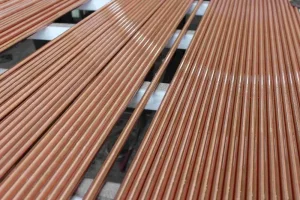
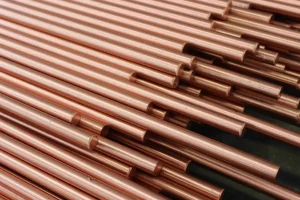
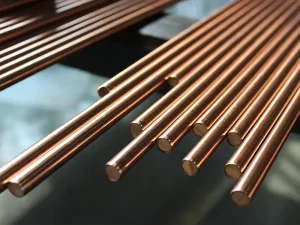
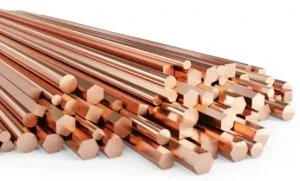
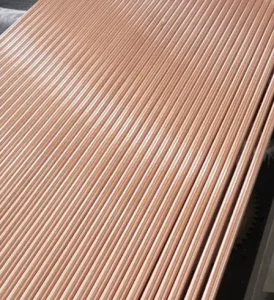
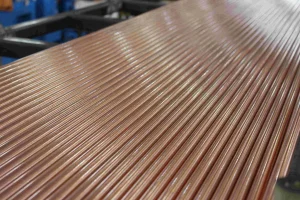
Engineered to deliver exceptional conductivity, outstanding machinability, and superior mechanical durability across industrial systems.
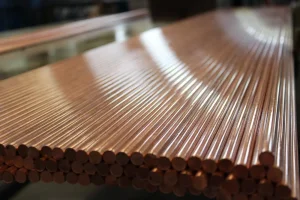
Analyzing metallurgical physics, mechanical thresholds, and high-conductivity OEM supply chain architectures.
High-performance copper alloys are the backbone of modern power distribution, signal routing, and ultra-high-speed thermal systems. Among these, C14500 Tellurium Copper occupies a highly critical specialized space. It combines the high electrical and thermal conductivity of pure copper with the outstanding machining characteristics of free-cutting brass. The metallurgical challenge has historically been balancing these opposing variables: adding alloying agents typically causes severe degradation in electrical performance.
By introducing approximately 0.4% to 0.7% Tellurium (Te) under strictly controlled, oxygen-free conditions, copper tellurides ($Cu_2Te$) form as fine, uniformly dispersed intermetallic phases throughout the copper matrix. This structure serves as a natural chip-breaker during high-speed turning and Swiss-machining, elevating the machinability index to 85% (compared to free-cutting brass at 100% and pure electrolytic copper at 20%). The critical difference lies in the matrix structure. By keeping the oxygen content below 10 ppm (Oxygen-Free High Conductivity status), the risk of hydrogen embrittlement is eliminated. This ensures the alloy can safely undergo brazing, welding, and high-frequency annealing without structural failure.
"Industrial components must survive environments where thermal cycle fatigue and electrical degradation are constant threats. Oxygen-free processing ensures that high purity levels (exceeding 99.9% Cu+Te) are maintained, securing electrical conductivity ratings above 93% to 98% IACS."
To maintain reliable performance under load, design engineers must verify precise mechanical and thermal profiles. Below are the benchmark specifications for premium Oxygen-Free Tellurium Copper, compared against standard C11000 and C14500 grades:
| Property Parameter | Standard Electrolytic (C11000) | Standard Tellurium (C14500) | Kepai High-Conductivity OF-Te-Cu |
|---|---|---|---|
| Electrical Conductivity (% IACS) | 101% | 90% - 93% | 93% - 98% |
| Machinability Rating | 20% | 85% | 85% - 90% |
| Oxygen Content (ppm) | 100 - 400 ppm | N/A (Variable) | < 10 ppm (Oxygen Free) |
| Tensile Strength (MPa) | 220 - 310 | 250 - 340 | 260 - 380 (Tailored Tempers) |
| Hydrogen Embrittlement Resistance | Poor | Moderate | Exceptional / Immune |
Established in 2017, Sichuan Kepai New Materials Co., Ltd. is a high-tech enterprise integrating research, development, production, and sales. Operating from our advanced facility spanning 9,000 square meters alongside 1,000 square meters of modern office space, we specialize in strategic emerging new materials aligned with the national 13th Five-Year Plan.
Our core focus lies in special copper alloys, including high-conductivity oxygen-free tellurium copper, silver copper, and dispersion-strengthened copper. These products are widely utilized in emerging industries like electric vehicles, 5G communications, high-power industrial laser systems, and lithium battery relays.
Located in the western area of the Sichuan Guanghan Industrial Development Zone, adjacent to National Highway 108, our site offers convenient logistical access. This network supports prompt raw material acquisition and rapid international shipping to support global supply chains.
Since our founding, Kepai has followed the philosophy of "innovation-driven development, quality wins the market." We are committed to supplying high-end copper alloys that help our clients reduce manufacturing costs and lower their carbon footprint.
The demand for high-conductivity oxygen-free tellurium copper is rising, driven by several key technological developments:
Electric Mobility & Infrastructure: EV charging connectors, high-current pins, and battery terminal contacts undergo high electrical loads and thermal cycling. Standard copper alloys tend to overheat, causing contact degradation. High-conductivity OF-Te-Cu maintains low contact resistance, reducing temperature rise and helping support short charging cycles.
5G and High-Frequency Telecom: Next-generation telecommunications infrastructure requires high-frequency coaxial connectors, RF pins, and precision shielding components. These complex parts require tight dimensional tolerances, which are difficult to machine using standard pure copper. The high machinability of C14500 enables clean thread profiles and low burr counts at high production volumes.
Plasma and Laser Cutting Technology: Consumable nozzles and electrode holders run at high thermal gradients. OF-Te-Cu helps dissipate heat rapidly, helping extend the operating life of consumables in heavy industrial cutting.
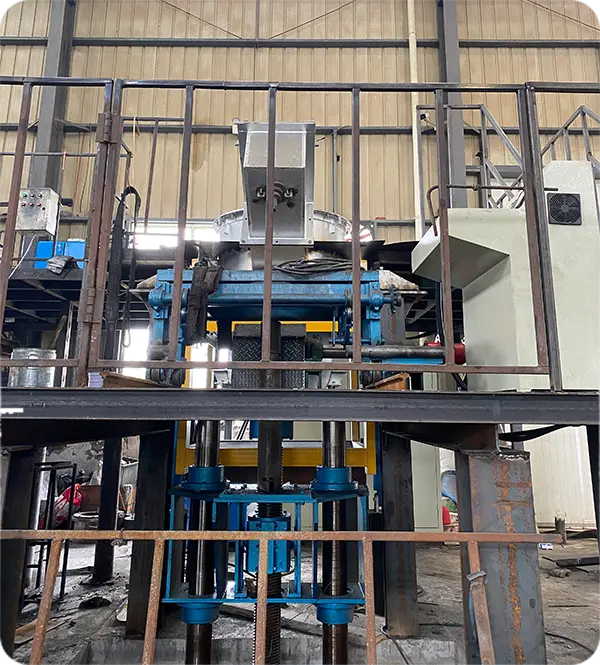
As a specialized manufacturer, Sichuan Kepai provides end-to-end OEM customization. We control the supply chain from raw material selection and vacuum induction smelting through to extrusion, drawing, and precision testing.
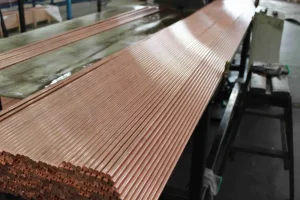
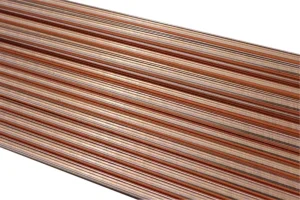
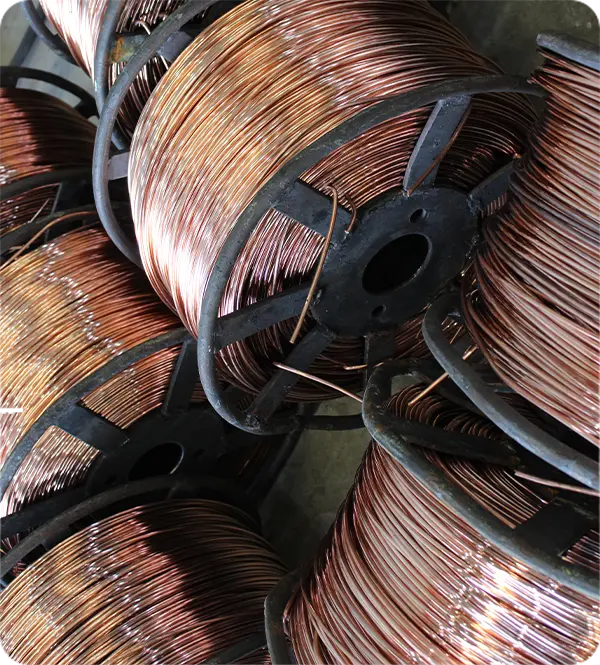
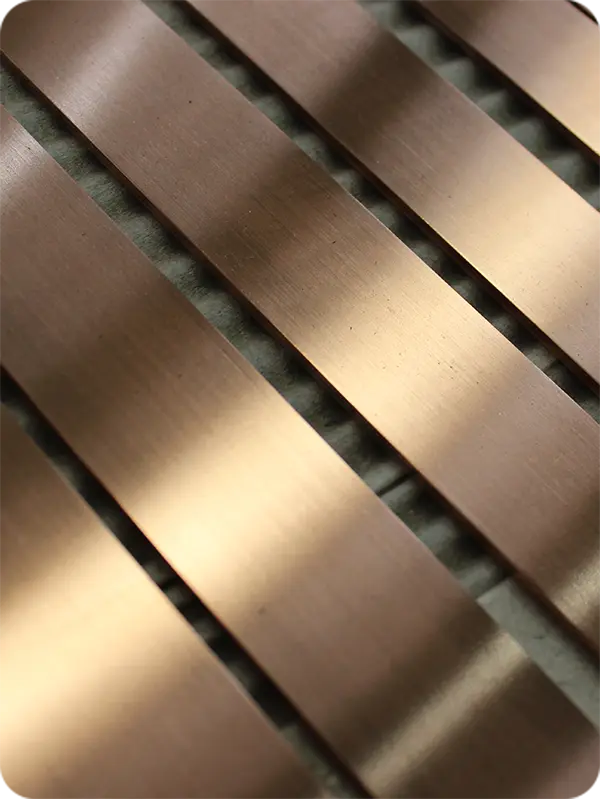
This integrated production control allows us to adjust chemical compositions for specific requirements—such as adjusting tellurium ratios to optimize machinability or minimizing impurities to maximize IACS conductivity. We offer custom bars, rods, profiles, and wire shapes to help minimize machining scrap and improve raw material yields for our global clients.
Combining technological innovation, a broad product portfolio, global logistics, and a collaborative corporate culture.
Technological innovation is central to our operations. Our R&D and production teams consist of industry specialists who follow global material technology trends and work to advance high-performance copper alloys. Through independent research and academic partnerships, we have made progress in optimizing tellurium, lead, and sulfur coppers for electric vehicles, precision machining, plasma cutting, and energy storage systems.
Our portfolio covers standard and custom copper alloy formulations, including oxygen-free copper, high-conductivity tellurium copper, nickel-tellurium copper, tin bronze, beryllium copper, lead bronze, sulfur copper, and chromium-zirconium copper. These materials help customers optimize machining cycle times, reduce processing costs, and improve thermal and electrical performance.
Kepai follows a strategic approach focused on serving the domestic Chinese market while expanding our international presence. By maintaining a reliable sales network and supporting long-term cooperation with multi-national OEMs, we ensure stable delivery timelines and professional local technical support across Europe, North America, and the Asia-Pacific region.

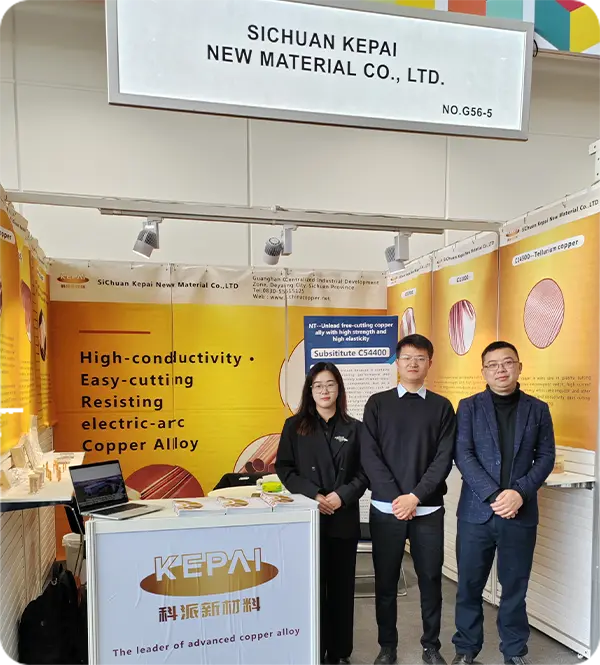
We focus on a culture built around "integrity, innovation, collaboration, and mutual growth." By encouraging our team to explore new engineering techniques and supporting continuous professional development, we maintain a collaborative work environment focused on providing reliable service and value to our global partners.
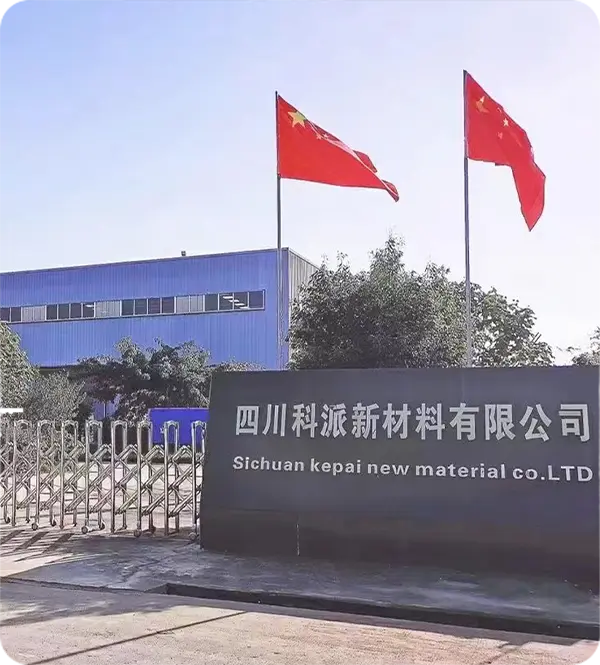

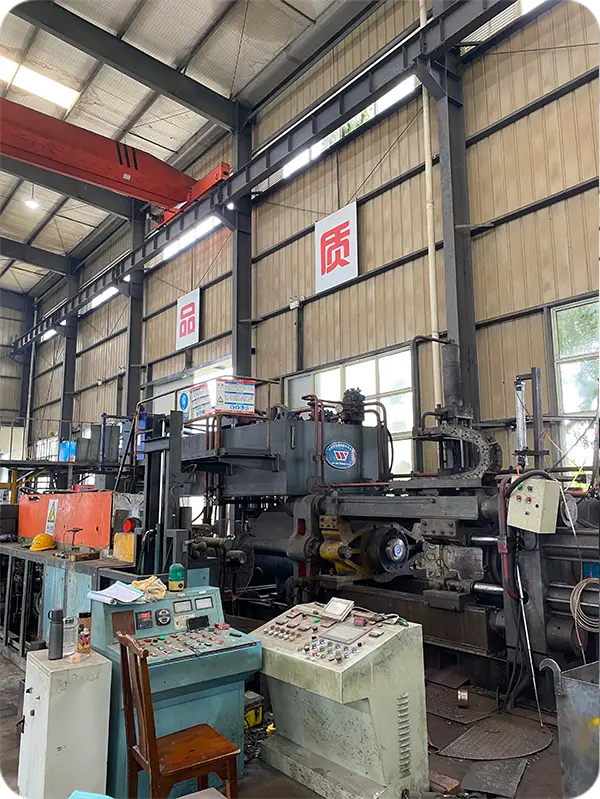
Our vertically integrated manufacturing facility features modern machinery and testing instruments to verify dimensional accuracy, mechanical performance, and alloy purity.
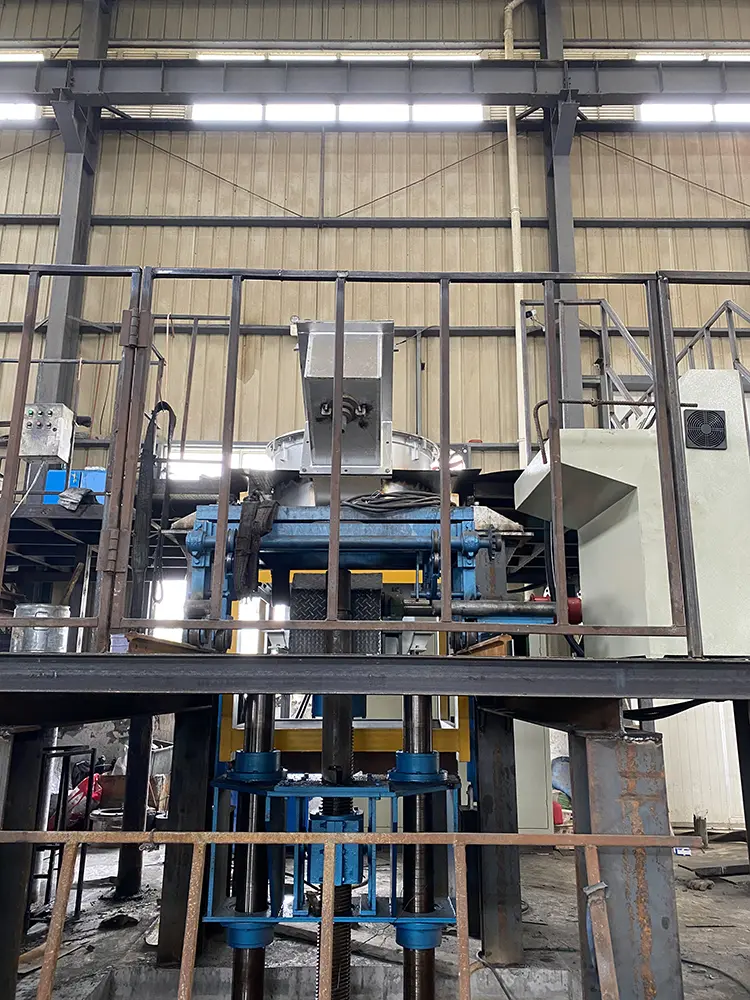
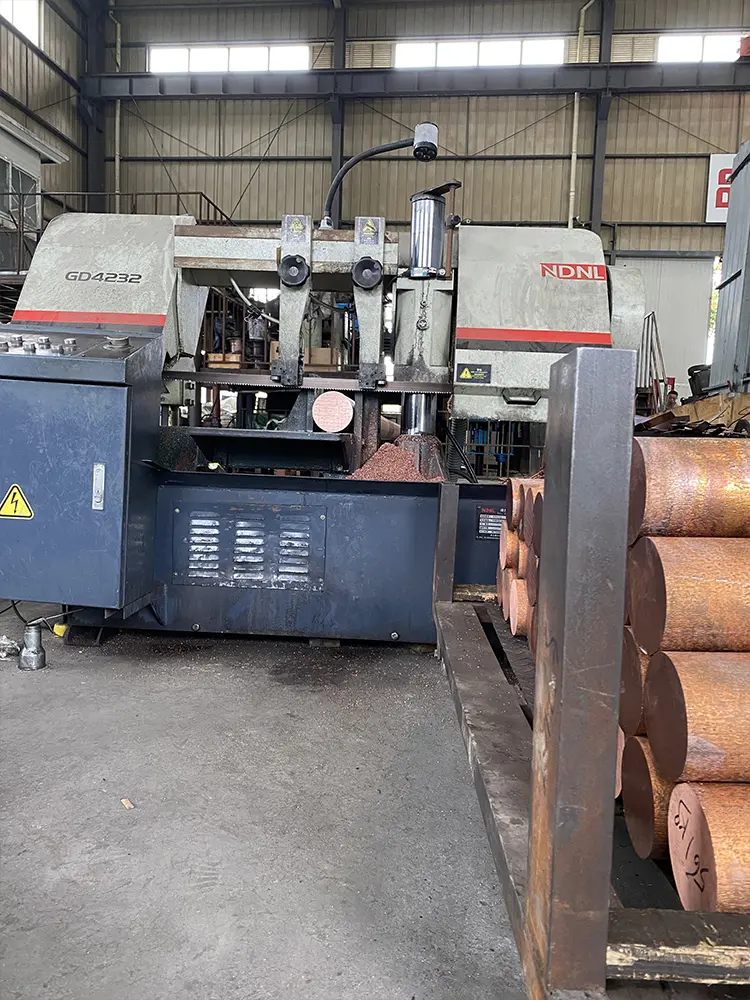
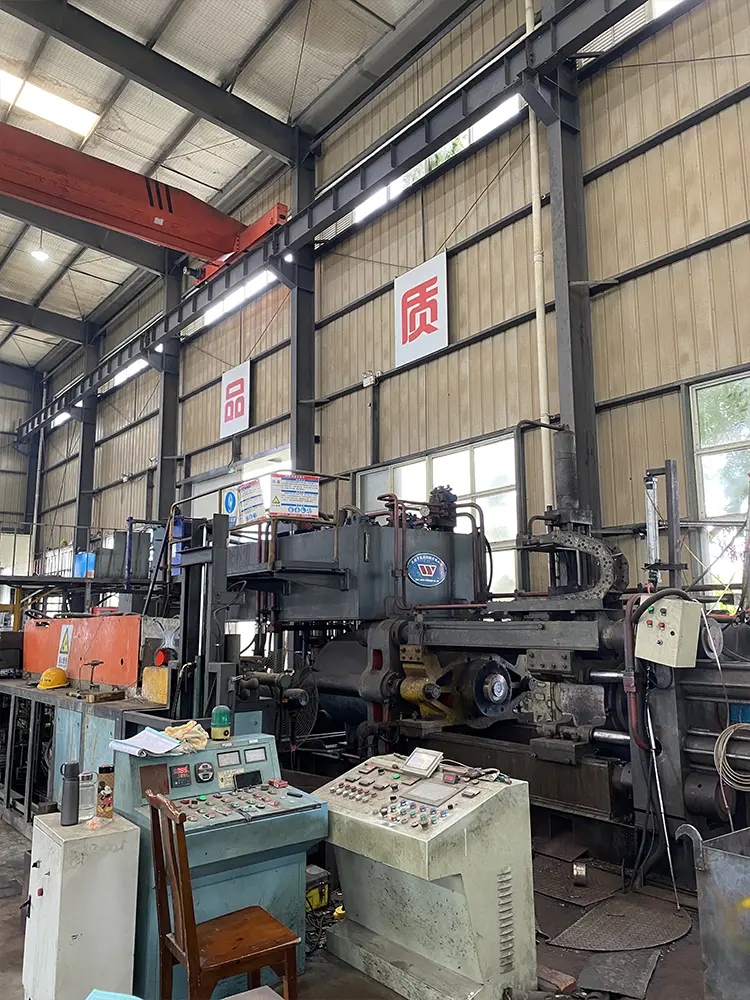
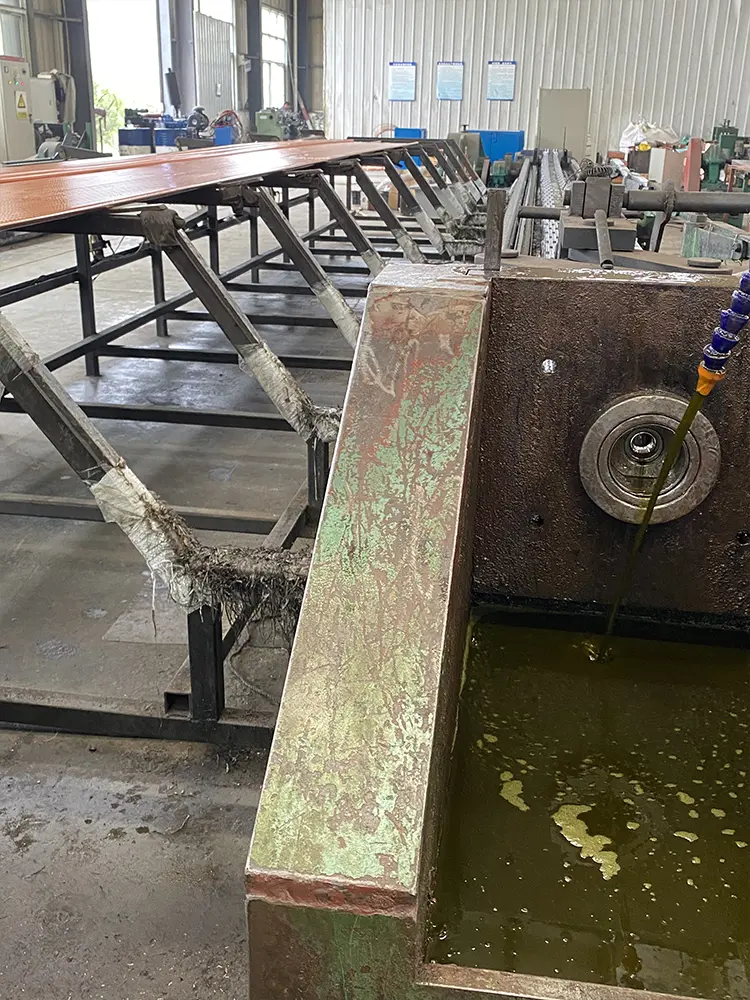
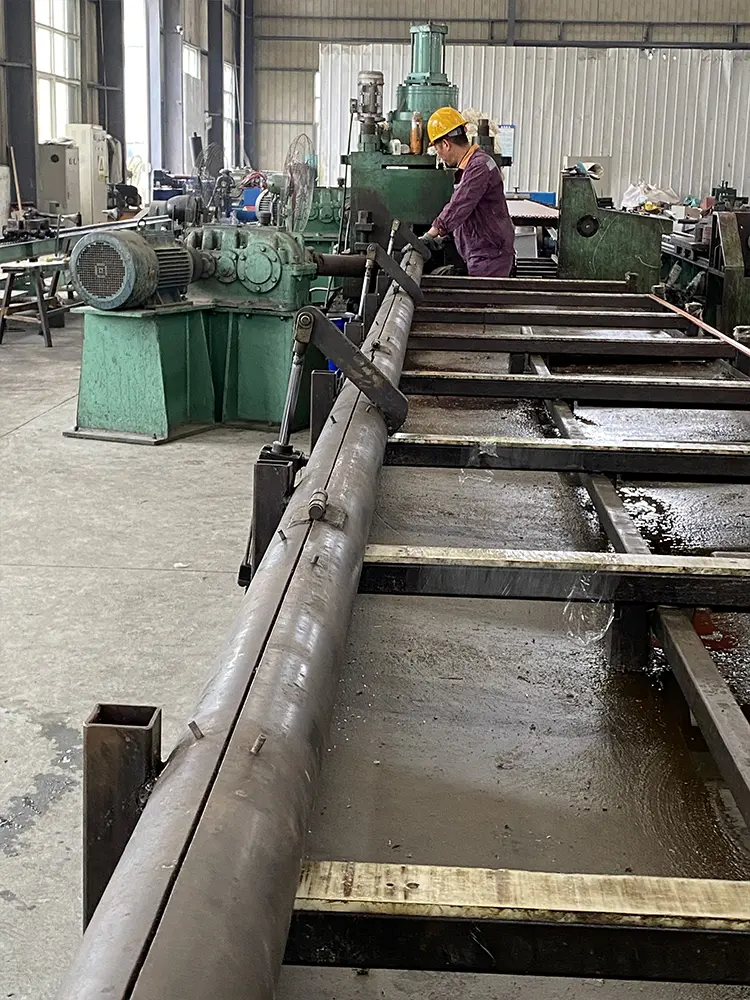
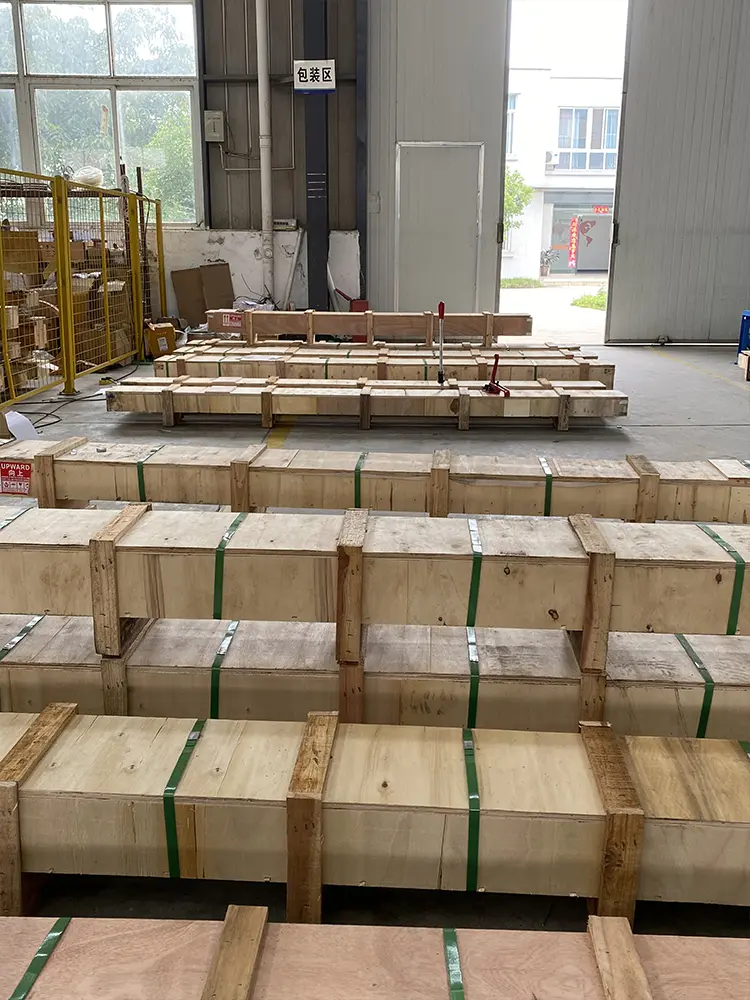
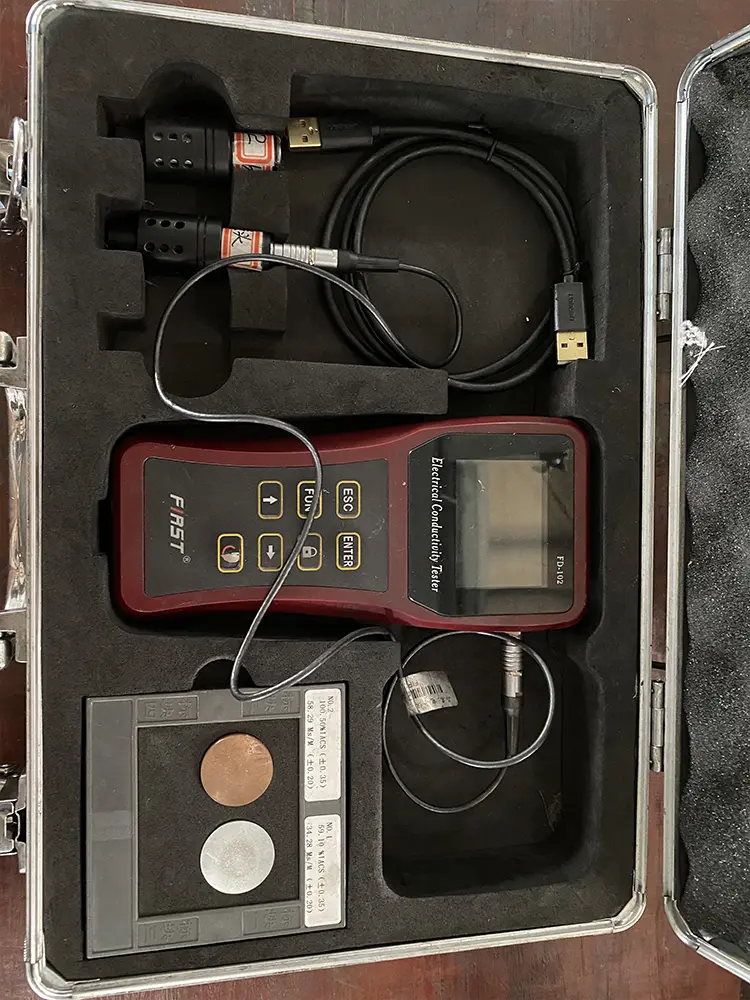
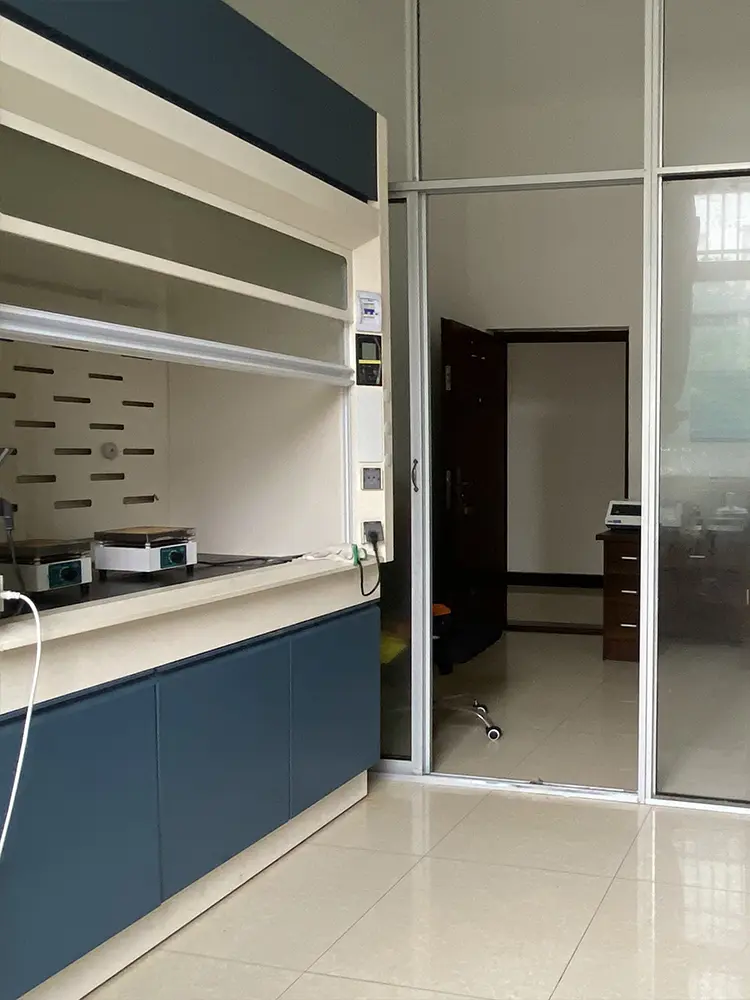

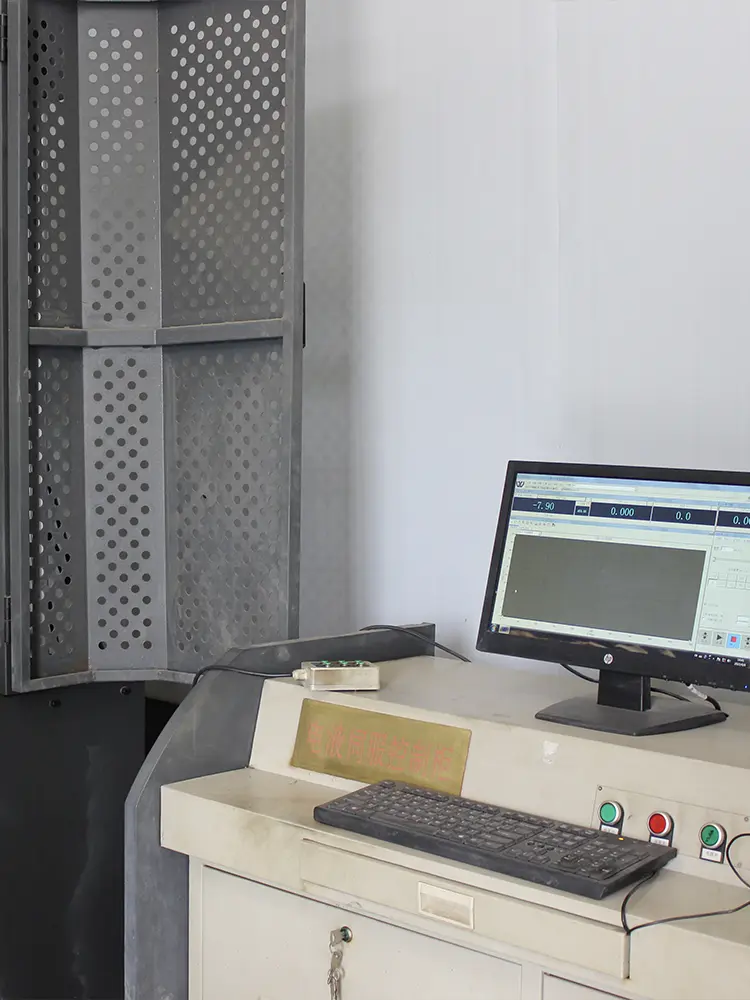
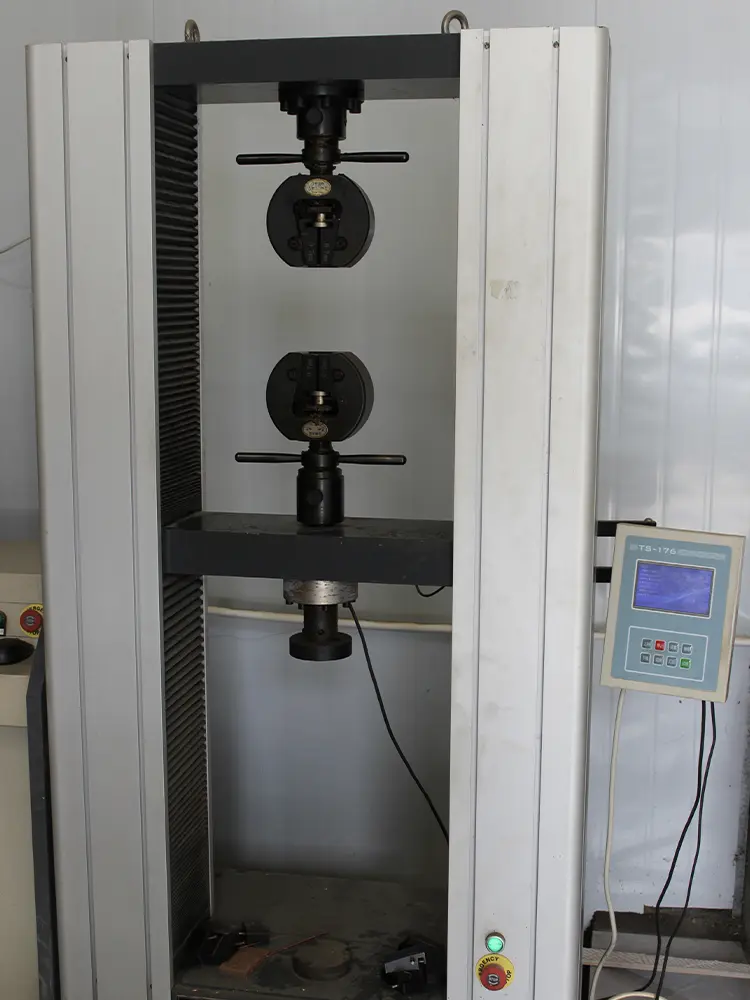
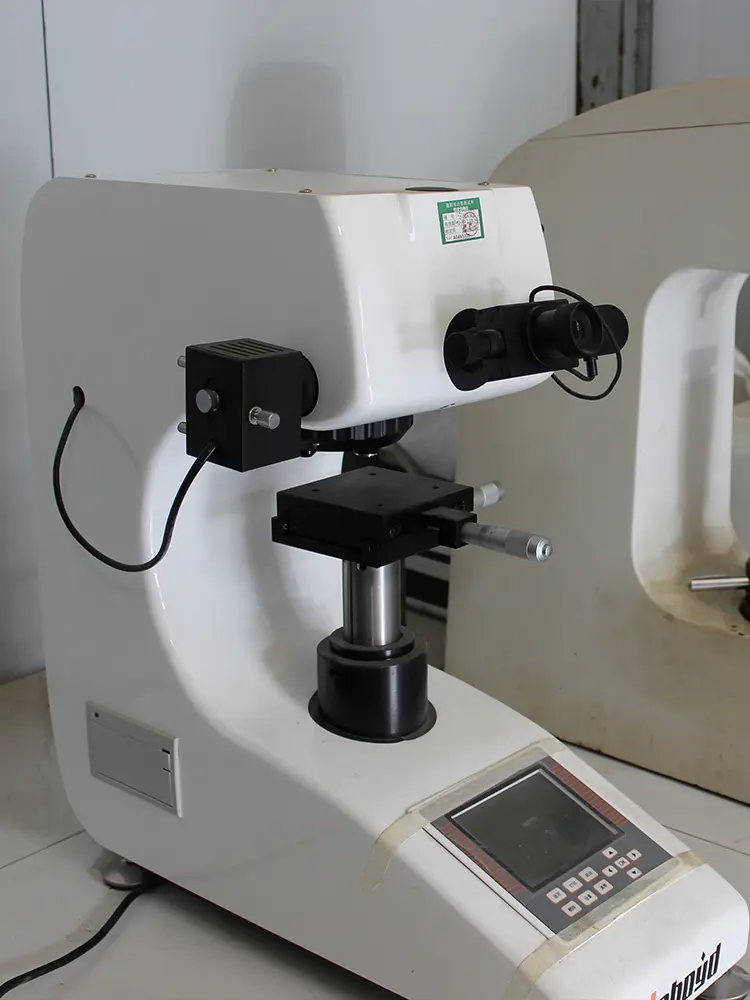
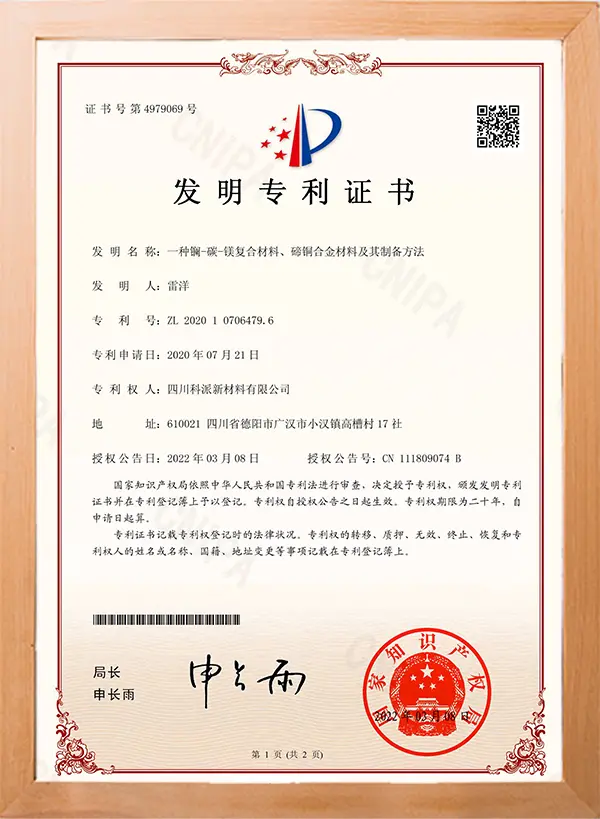
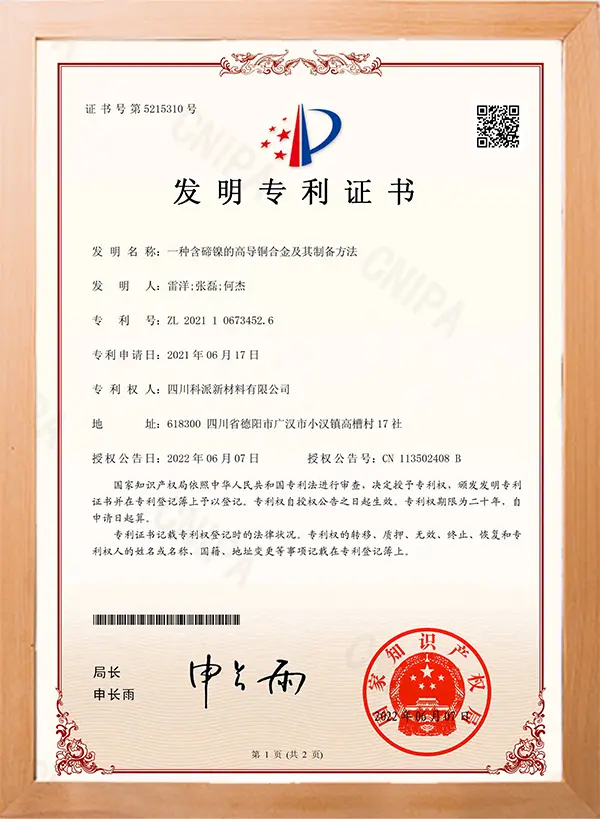
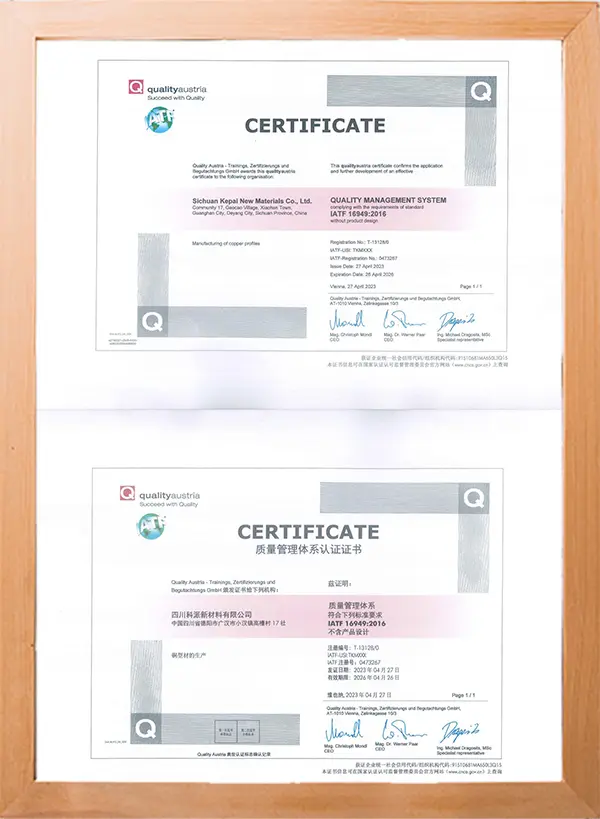
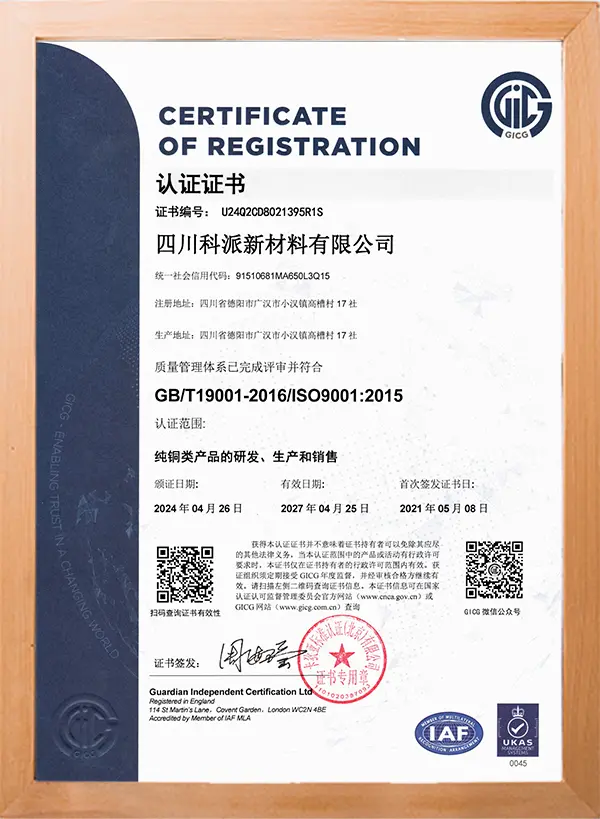
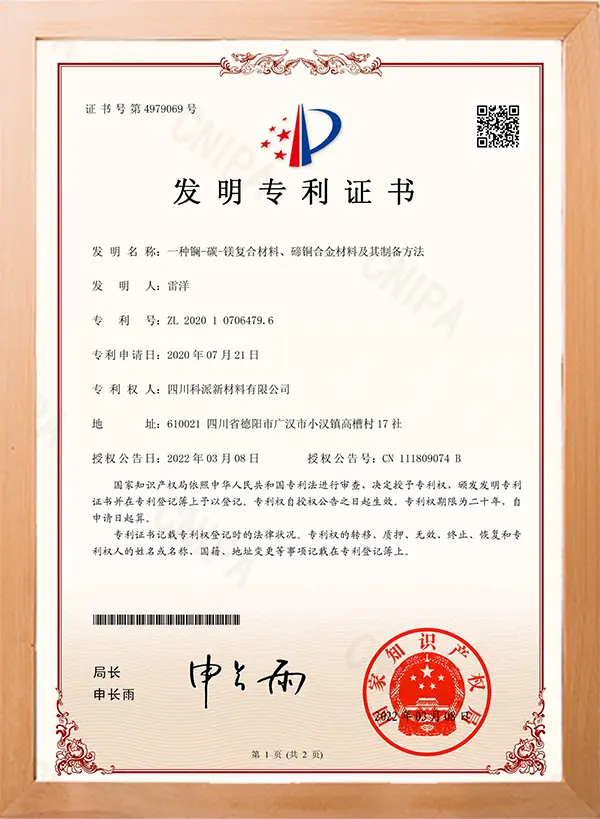
Our manufacturing and processing stages are governed by strict quality management frameworks to ensure reliable, high-grade material output.
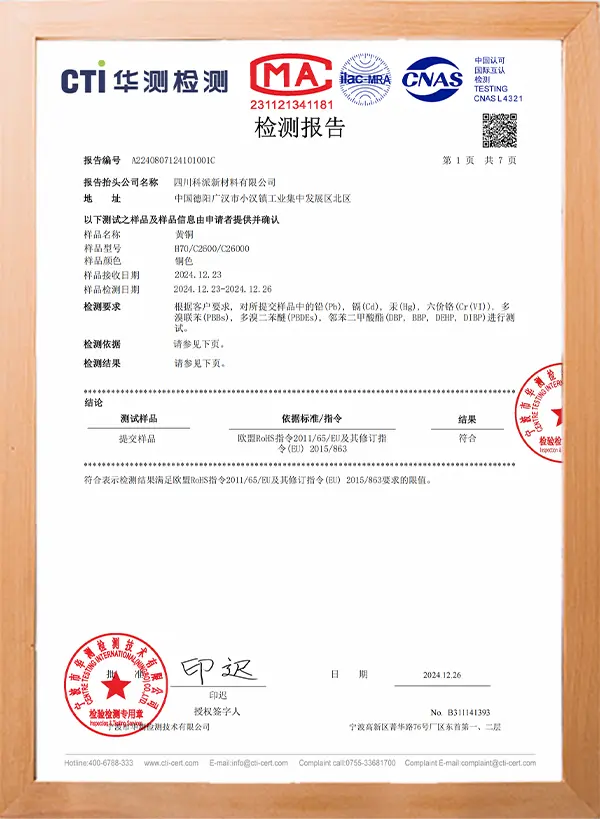
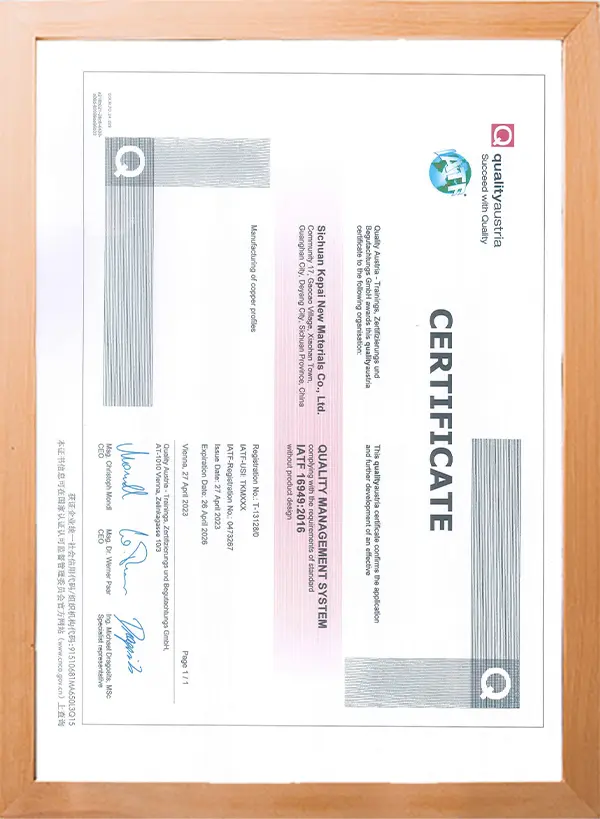
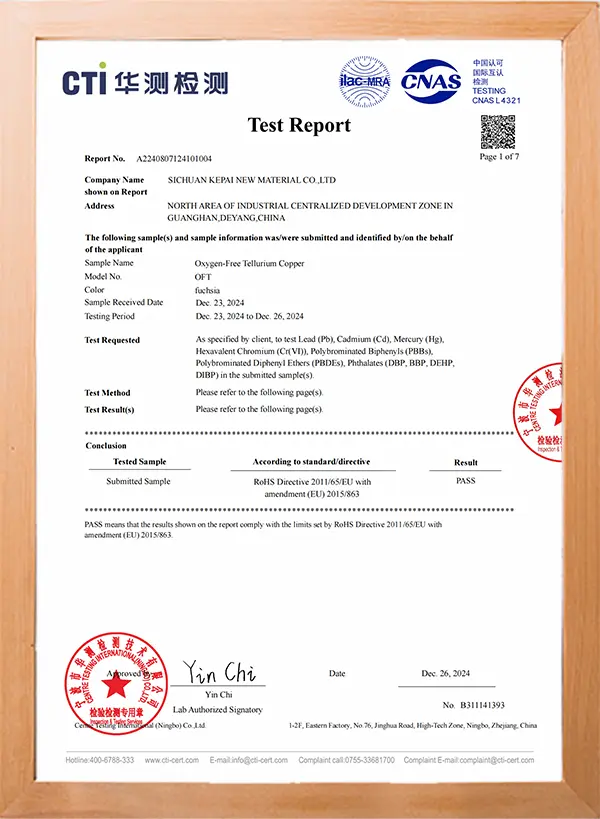
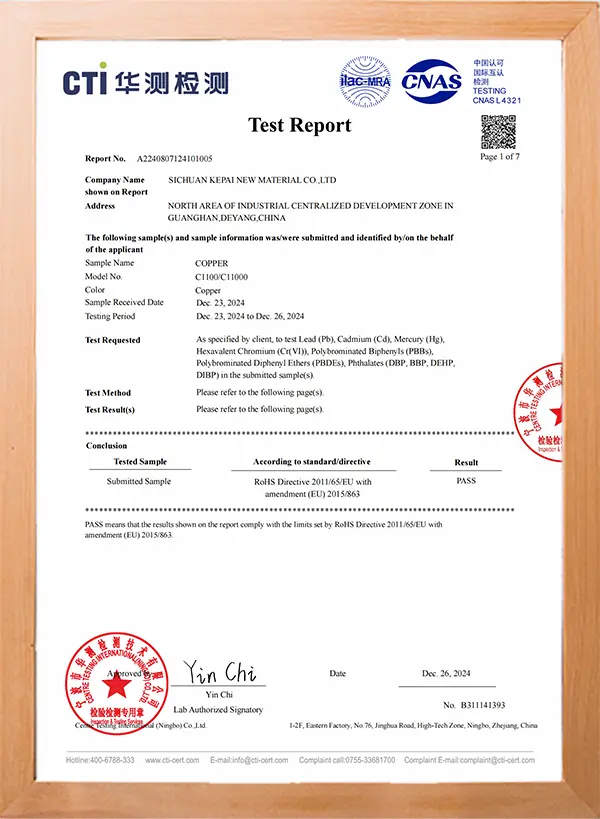
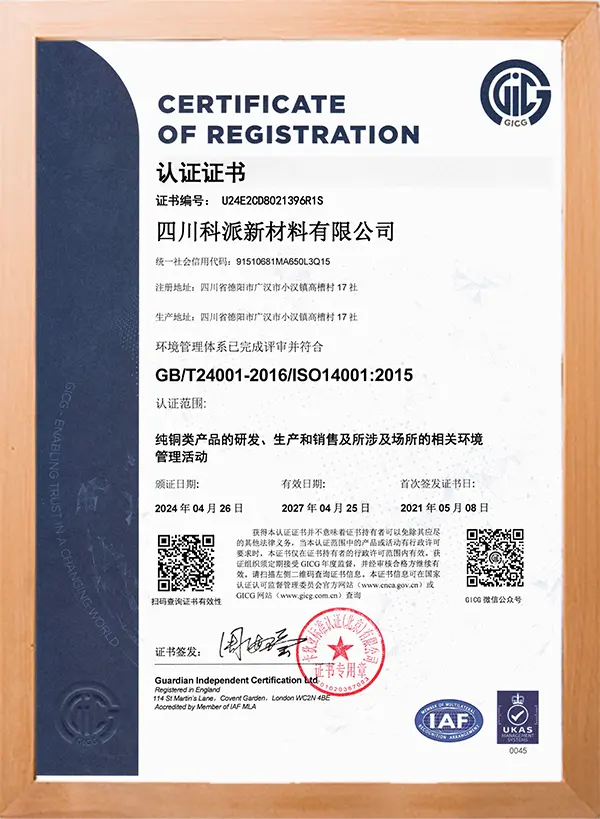
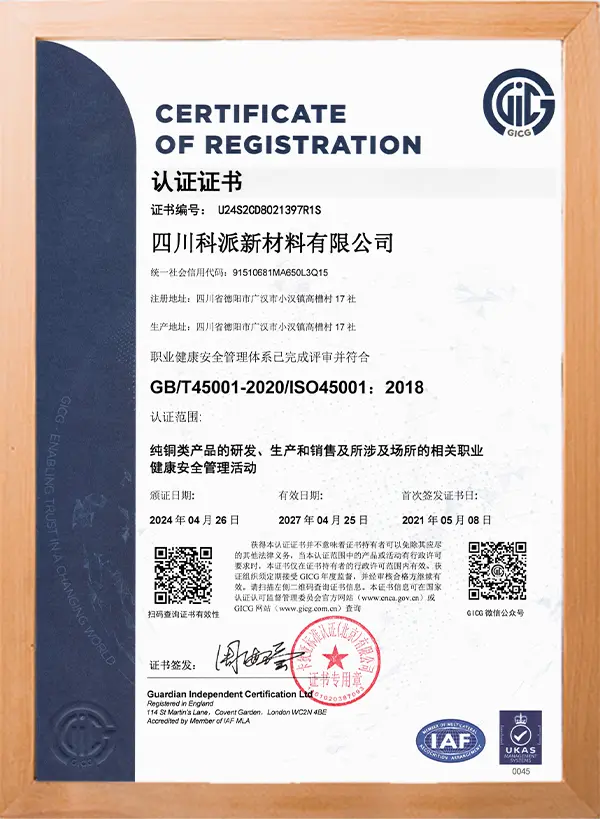
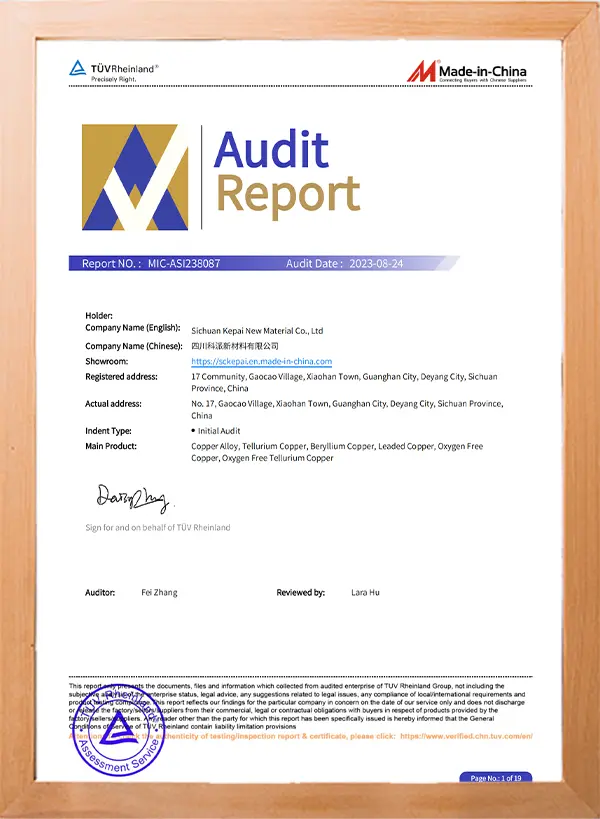
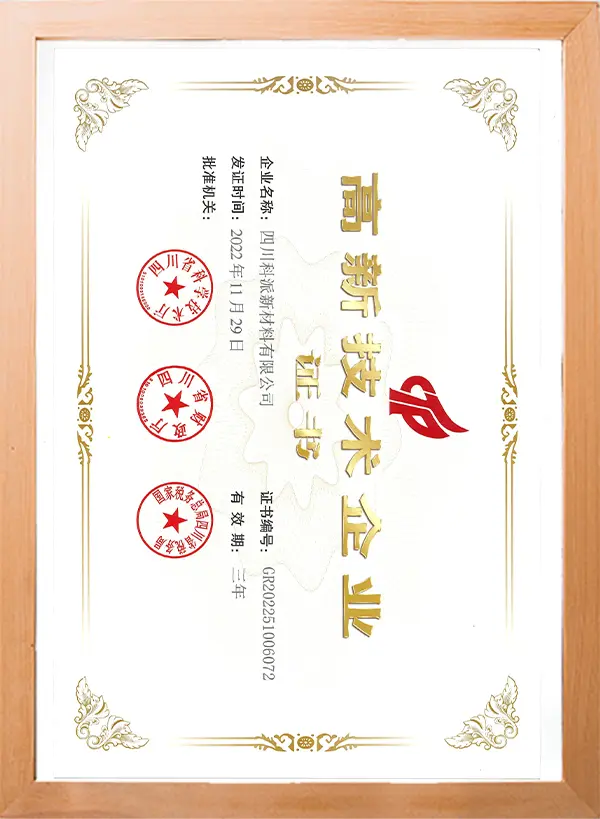
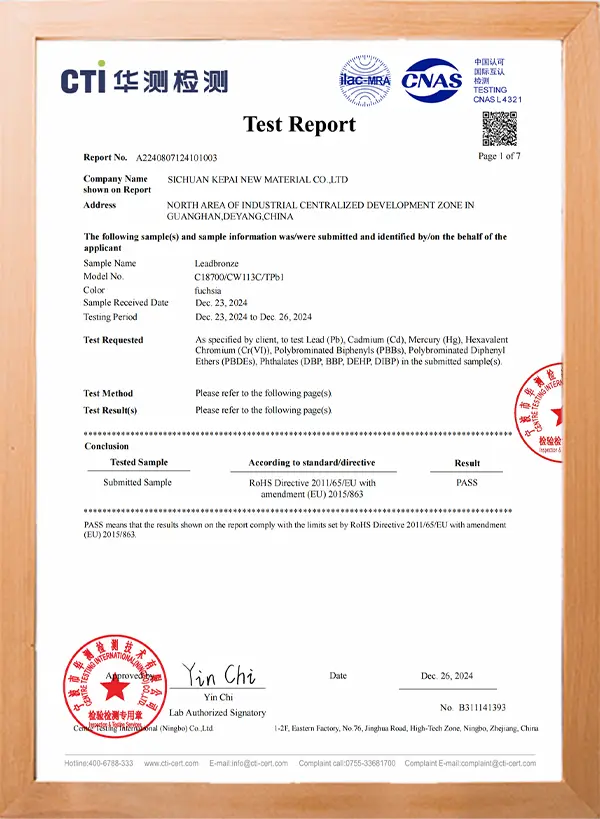
Modern global supply chains operate under strict environmental and hazardous material compliance guidelines. Industrial clients must ensure their components meet environmental standards like RoHS (Restriction of Hazardous Substances) and REACH (Registration, Evaluation, Authorisation and Restriction of Chemicals).
Sichuan Kepai produces tellurium copper alloys that comply with these international standards. We monitor and manage our production inputs to control trace impurities like lead (Pb), cadmium (Cd), and mercury (Hg), keeping them well below regulated limits.
By maintaining a modern, energy-efficient production facility in Sichuan, we also aim to minimize carbon emissions per ton of copper produced. Our recycling systems allow us to process clean manufacturing scrap internally, supporting resource efficiency and helping lower raw material costs.
As operating power levels rise in application environments, components are subjected to higher thermal and mechanical stresses. For example, high-power DC fast-charging terminals and high-speed industrial manufacturing equipment operate under demanding conditions.
In response, Sichuan Kepai is researching and developing next-generation multi-element copper alloys. By combining trace tellurium additions with elements like chromium, zirconium, or nickel, we aim to design alloys that offer excellent electrical conductivity alongside high mechanical strength and thermal stability at temperatures exceeding 400°C.
Addressing the common metallurgical, machining, and supply chain questions raised by engineering and procurement teams.
Explore our complete product system, featuring high-strength, wear-resistant, and high-performance copper formulations.
Consult with our materials engineers to optimize your machining efficiency and alloy performance parameters.
 Kepai
Kepai